Dissecting Leftism's Of Interest (2) sub-blog has a brilliant post today of a reader's email on leftism. I have shown it here in it's entirety:
"Why I distrust liberalism:
By Jason Depew
At a brief glance, liberalism appears very noble and altruistic. I believe that people who are liberals truly do elicit genuine concern for humanity. Some common topics of liberal interest are concern for the environment, concern for the welfare of all members of a population, and a hope that all people of the world can have access to certain things in life(food, shelter, education, health care, opportunity, etc..), and be protected from certain things in life(oppression, physical danger, etc..). They believe that in order to improve things as a whole, it is necessary for us to try to correct the injustices, inequities, and dangers that plague mankind and the world. Let me state that many policies that have benefitted the world have arisen from the liberal and progressive political movements. However, I have noticed some glaring weaknesses in some of today's liberals that I cannot ignore.
There are various types of liberals. I have decided to narrow my descriptions to the slight, moderate, and extreme liberals with the hopes that most of the other liberals that populate the world will fall somewhere in between. My descriptions of "liberal" behavior are not confined to views on economic ideas. I think they are applicable to liberal stances on other topics of concern(racial issues, the environment, etc..).
Slight liberals have beliefs that hover more towards the center of the political spectrum. They espouse all of the standard liberal centerpiece beliefs. Ironically, the most recognizable trait of the slight liberal is apathy. They believe in these things and would like to see them instituted so that people may benefit from them, but they usually don't do anything about it. Most of the time their beliefs are purely aesthetic things which please their sensibilities
and idle concerns but that are not powerful enough to elicit concerted and significant action.
As someone gets more towards the moderate and extreme liberal beliefs they have a tendency to impose what I call the "Oppression Dialectic" on their observations of the world.
The moderate liberals use a more muted version of the "Oppression Dialectic". They examine situations and often seperate the participants into two groups; the party that is "on top" who are the winners(who possibly have unfair advantages) and the party that just couldn't succeed in the said situation that deserves pity and sympathy. Moderate liberals don't like to see disadvantaged parties experience disappointment, failure, and hardship(strangely enough they sometimes take pleasure in seeing people fail that they construe as being "on top".). They have a tendency to disapprove of success, because when one party wins there is at least one party that didn't win. Invariably, they side with the perceived loser; the poor downtrodden party.
There are things that I can admire about moderate liberals. They are more energetic than slight liberals and less myopic than extreme liberals. They also tend to be well-informed and optimistic about what they want the world to be like.
I can understand the moderate liberal's desire(which arises out of empathy) to shield people from hardship and to root for the underdog. But, attempting to eliminate failure from the human experience is not natural. I think that failure is a valuable part of life. It has the capability of teaching important lessons such as humility and wisdom. If looked back upon with a clear head, failure can help a person determine what they need to do or change in order to succeed. People were not meant to float through life while experiencing no disappointments. If all that everyone experiences is a rigged and controlled success, where failure is abolished and everyone is equal, it is not true success; it is a sham. You are taking a person's right to pursue what they want and what they want to achieve and you are relegating them to a forced equality with their fellow man. Sure, you raise some people out of the depths of failure, but you also limit other people's access to success and its fruits. This gagging of the human spirit; in the name of politeness, equality, and civility disheartens me. I can think of nothing that is more unnatural, restricting, stifling, and insulting to ambition and self-determination.
Of all of the forms of liberalism, I think I am most qualified to talk about extreme liberalism because I used to be heavily influenced and controlled by it. To put it bluntly; I was young, naive, and I didn't thoroughly question the tenets that I excitedly embraced. Nowadays, this brand of liberalism merits the most scorn from me.
Extreme liberals usually fall into one of two categories: The first contains people who are woefully misinformed and who engage in a slogan-filled, jingoistic, and bombastic exercise of their beliefs. These first types have an avante-garde penchant for conforming to rebellion (the irony here is obvious), and as a result appear pretentious and comical. The second group contains people who are usually educated beyond their intelligence. This second group is filled with people who are sincere but misguided sophists that engage in esoteric and pedantic intellectual masturbation as they immerse themselves in their ideas and theories. They are so enamored with their ideas (that have grand implications and that concern injustices that are often far-off) that they usually fail to objectively observe actual people. When no injustice can be seen they will exaggerate or invent one.
The extreme liberals utilize the "Oppression Dialectic" in a much more shrill and audacious way than the moderate liberals do. They frame every occurrence to fit their ideological tilt and are so eager to correct perceived inequalities that they engage in hyperbolic action and speech. They will examine a situation and seperate the participants into two parties; the power-hungry oppressors who sadistically and tyrannically pursue and wield absolute control and the victimized and oppressed group who have to live under such humiliating and inhumane circumstances. They always disapprove of the people they view as the oppressors and use every chance they have to discredit them. They exaggerate every mistake, shortcoming, and failure of the oppressors. They always side with the perceived underdog and oftentimes sympathize with, attempt to justify, or outright ignore any innappropriate behaviour of the members of the perceived oppressed community. They also exaggerate every hardship endured by, and every accomplishment of, the oppressed. If an extreme liberal determines themself to be a member of a disadvantaged group, they cling to a sense of victimhood(which is oftentimes exaggerated and self-righteous). If the extreme liberal is not a member of the disadvantaged group, they will go out of their way to coddle members of the disadvantaged group. This coddling usually manifests itself in a prostrating and obsequious politeness(which I find to be absolutely nauseating).
They preach a sanctimonious tolerance for everything and everyone. Ironically, this tolerance is almost always selectively applied to ideas and groups of their choosing. All too often, extreme liberals are possessed by a vitriolic, derisive, and arrogant elitism that commands them to become enraged at anybody who deviates from their views. They laud the ideals of freedom of expression and independent thought and they are disdainful of close-mindedness and people blindly following a cause, yet they consistently fail to achieve the things that they espouse and they consistently succumb to the traits that they despise.
The more extreme a liberal gets the more pronounced their simultaneous acerbic pessimism and hopeless idealism is. They have a tendency to view their fellow humans(especially people who happen to not hold their beliefs) in a condescending manner, yet they have undying hopes and dreams for humanity. These hopes and dreams usually translate into obsessive utopian yearnings for Mankind. As with all extremists, they think that only they know what ails the world and only their beliefs provide relief for it. Their unrealistic assessments of the world are followed by unrealistic prescriptions for its improvement. They think that if only the institutions, attitudes, and policies that they deem are self-serving, exploitative, and ignorant would melt away, the world would magically become happy, free, and idyllic. This will never happen and the following paragraph explains why:
For a society to work you need a majority of participants who agree to live their lives in a certain way. In a utopian society where there is no hunger, everyone recieves a basic level of material sustenance (even those that are not physically or mentally capable of producing anything), and there is no greed or vice, people would need to put forth a remarkable effort and sacrifice personal interest. This will never happen. No matter what system people live under, no matter what they strive for, and no matter what they think the world should be like, they will never be able to live up to these unattainable dreams for humanity. Mankind is not capable of making a perfect world. There has never been an idea that originated from Man that was able to lift the human race completely out of its depravity and there never will be. Human beings are too enslaved by their whims. People will always exhibit every possible emotion and motive, from the most caring empathy to the most despicable selfishness. It has happened since the beginning of time and will happen until the end of time. No amount of "enlightenment" will ever change the fickleness and unpredictability of Man's behavior.
The only way to ensure the complete safety, equality, tolerance, tranquility, and "enlightenment" that extreme liberals crave would be to control Mankind mercilessly (which ironically is something that they claim to abhor). I would rather eat dirt and live in my own filth than to live under a system or a mandatory communal attitude that dictated what I should think, how I should act, and what I should be.
We of course must strive to make things as tolerable and as much to our liking as is possible. But, it is pointless to ignore reality and to attempt the impossible; especially if you are armed with something as pathetic as a hopelessly idealistic philosophy. It is like trying to leap up to the top of a mountain in one jump. But, extreme liberals who think that their beliefs contain the answer for mankind attempt it again and again. How can perfection arise from, or be expressed by, such an imperfect creature as Man? Extreme liberals never have an answer for that simple question and as a result their efforts and rantings are nothing but dogmatic exercises in futility.
Extreme liberalism can be summarized as a militant, warped, and misguided egalitarianism that is brought about by disaffected cynicism. It is a belief system that is often (but not always) confined to young people because the impetuousness and irrationality that taint it are also common symptoms of youth. On a certain level, I can admire and appreciate the energy, rigor, and determination of extreme liberalism. But, it is hard to ignore the lack of wisdom and open-mindedness that mark it. These people who seek to impose their ideological whims upon their fellow man are nothing but tumors."
Tuesday, May 03, 2005


Monday, May 02, 2005
The Weaning of America
Unless the program is significantly reformed, Social Security (SS) will become insolvent by 2041. According to Dictionary.net, "insolvency" means "one who is unable to pay his debts as they fall due". In 2041, SS will no longer be able to pay promised debts and will be insolvent, as obligations will by that year exceed income to the fund, as the trustees of the SS Trust Fund recently reported.
If nothing is done to correct this impending insolvency, the program will by 2041 be able to pay recipients of SS only 74% of promised benefits. According to the SS trustee's report, one solution to the impending insolvency of the program is the "immediate increase of 15 percent in the amount of payroll taxes or an immediate reduction in benefits of 13 percent (or some combination of the two)." I am confident that almost no one would want to see their taxes increased or benefits reduced by that much to protect a system so fundamentally flawed as SS. What is needed, therefore, is a gradual weaning from the current pay-as-you-go, federally controlled system to an ownership-based system, as broadly outlined by the president in his news conference last week.
A system where individuals have control of their own retirement money, and have choices for how the money is invested, will align the retirement goals of all Americans with the continued success of our market-based economy. The money put away for retirement will be put back into the economy where it can be used by business to create jobs, provide goods and services, and build a better, more financially secure America.
For some people, the idea of investing in the stock market is very intimidating, but there can easily be selectable portfolios with varying degrees of risk and reward to protect those with little or no investing experience. The system would need to be gradually phased-in starting with younger workers, where their investment time-horizon to retirement is long enough that any market fluctuations will both teach them how to invest, and won't hurt them long-term. Finally, as one approaches retirement the system could restrict the type of investments available to minimize risk and protect the retirement nest egg from sudden market changes just before retirement. And of course, there would still be a 'safety net' to ensure the dignified retirement for the poor and those who, for one reason or another, simply cannot provide for themselves.
The key to this system, though, is the alignment of retirement goals with the overall economy. We all participate in the economy, and when our retirement funds are invested in and count on the future success of the economy, it will put us all in the same boat rowing in the same direction. It will lessen the tax burden on Americans, and will make the public funding of retirement for the poor easier for the taxpayer and more fullfilling for the recipient. Remaining tax dollars can go to funding other priorities, such as the even more urgent Medicare crisis. Best of all, we won't have to revisit this same argument again to try to "save" a system that is by its design destined for failure.
This post also appears on Blogger News Network.
If nothing is done to correct this impending insolvency, the program will by 2041 be able to pay recipients of SS only 74% of promised benefits. According to the SS trustee's report, one solution to the impending insolvency of the program is the "immediate increase of 15 percent in the amount of payroll taxes or an immediate reduction in benefits of 13 percent (or some combination of the two)." I am confident that almost no one would want to see their taxes increased or benefits reduced by that much to protect a system so fundamentally flawed as SS. What is needed, therefore, is a gradual weaning from the current pay-as-you-go, federally controlled system to an ownership-based system, as broadly outlined by the president in his news conference last week.
A system where individuals have control of their own retirement money, and have choices for how the money is invested, will align the retirement goals of all Americans with the continued success of our market-based economy. The money put away for retirement will be put back into the economy where it can be used by business to create jobs, provide goods and services, and build a better, more financially secure America.
For some people, the idea of investing in the stock market is very intimidating, but there can easily be selectable portfolios with varying degrees of risk and reward to protect those with little or no investing experience. The system would need to be gradually phased-in starting with younger workers, where their investment time-horizon to retirement is long enough that any market fluctuations will both teach them how to invest, and won't hurt them long-term. Finally, as one approaches retirement the system could restrict the type of investments available to minimize risk and protect the retirement nest egg from sudden market changes just before retirement. And of course, there would still be a 'safety net' to ensure the dignified retirement for the poor and those who, for one reason or another, simply cannot provide for themselves.
The key to this system, though, is the alignment of retirement goals with the overall economy. We all participate in the economy, and when our retirement funds are invested in and count on the future success of the economy, it will put us all in the same boat rowing in the same direction. It will lessen the tax burden on Americans, and will make the public funding of retirement for the poor easier for the taxpayer and more fullfilling for the recipient. Remaining tax dollars can go to funding other priorities, such as the even more urgent Medicare crisis. Best of all, we won't have to revisit this same argument again to try to "save" a system that is by its design destined for failure.
This post also appears on Blogger News Network.
Saturday, April 30, 2005
Reforming Social Security Makes More Sense Than Ever
I didn't get to hear all of the president's news conference this week, but what I did hear about his proposals for reforming Social Security (SS) impressed me very much. Most interesting to me was the overall strategy of his fix, and that brought into focus even more sharply than I laid out in my previous post on this subject.
The vision that the president displayed for all to see was that he wants to change the way people think about SS. Under the current pay-as-you-go system, the money we pay into the system as workers is used to pay those already retired, widowed, or orphaned. So you don't get the money you pay in. It's not "your money", as so many believe. He wants to change people's attitude about it by allowing those of us who want to to put part of that money aside in our own private account. That money will always be there for us and us alone.
Despite early attempts by the Democrats to deny the undeniable fate of SS if we do nothing, everyone now recognizes that SS is in trouble. The only disagreement is how to fix the problem. The president is showing leadership by proposing very minor changes. The Democrats, by their own admission, have no such plan. They don't know what to do except try to protect the current fundamentally flawed system.
One of the proposals put forth by the president this week was to consider reducing benefits to the wealthy, and raise benfits for the poor. The Democrats oppose this proposal as they did during the debates to "fix" SS in the previous decades because they don't want the American people to realize that this is just a welfare program for the poor. The Democrats want EVERYONE to receive SS benefits regardless of income or need. This view is mainly because the Democrats don't want to see one of the socialist bastions of the New Deal era modified so that it supports capitalism and and actually uses the concept of the free market and capitalism to improve the program. Their opposition isn't because they want to make the system better and help more people, it is purely political. They see one more source of their political power, the power of controlling the retirement prospects of the people, being devolved to the from the central government to the people. Despite their fervent statements about "being for the little guy", the Democrats don't trust the people to make the "right choices" about money.
The president understands that without significant tax increases, or significant reductions in payouts, by 2042 no one will recieve more than 70% of their promised benefits. The private accounts will not solve this problem, but it will lessen the burden on the SS trust fund. So the severity of the tax increases and/or benefit cuts will reduced by the amount of money diverted to private accounts that will generate far greater return than traditional SS money. Private accounts within the SS system will make the entire system more efficient, and better able to support more people.
Support the changes outlined by the president. They are right for SS, and their are right for our future.
This post also appears on Blogger News Network.
The vision that the president displayed for all to see was that he wants to change the way people think about SS. Under the current pay-as-you-go system, the money we pay into the system as workers is used to pay those already retired, widowed, or orphaned. So you don't get the money you pay in. It's not "your money", as so many believe. He wants to change people's attitude about it by allowing those of us who want to to put part of that money aside in our own private account. That money will always be there for us and us alone.
Despite early attempts by the Democrats to deny the undeniable fate of SS if we do nothing, everyone now recognizes that SS is in trouble. The only disagreement is how to fix the problem. The president is showing leadership by proposing very minor changes. The Democrats, by their own admission, have no such plan. They don't know what to do except try to protect the current fundamentally flawed system.
One of the proposals put forth by the president this week was to consider reducing benefits to the wealthy, and raise benfits for the poor. The Democrats oppose this proposal as they did during the debates to "fix" SS in the previous decades because they don't want the American people to realize that this is just a welfare program for the poor. The Democrats want EVERYONE to receive SS benefits regardless of income or need. This view is mainly because the Democrats don't want to see one of the socialist bastions of the New Deal era modified so that it supports capitalism and and actually uses the concept of the free market and capitalism to improve the program. Their opposition isn't because they want to make the system better and help more people, it is purely political. They see one more source of their political power, the power of controlling the retirement prospects of the people, being devolved to the from the central government to the people. Despite their fervent statements about "being for the little guy", the Democrats don't trust the people to make the "right choices" about money.
The president understands that without significant tax increases, or significant reductions in payouts, by 2042 no one will recieve more than 70% of their promised benefits. The private accounts will not solve this problem, but it will lessen the burden on the SS trust fund. So the severity of the tax increases and/or benefit cuts will reduced by the amount of money diverted to private accounts that will generate far greater return than traditional SS money. Private accounts within the SS system will make the entire system more efficient, and better able to support more people.
Support the changes outlined by the president. They are right for SS, and their are right for our future.
This post also appears on Blogger News Network.
Tuesday, April 26, 2005
How Much of the Federal Government is Un-Constitutional?
The federal government has overstepped its Constitutional authority in the creation of the gigantic bureaucracy of departments, agencies, and regulations. A very high percentage of the federal bureaucracy and the supporting laws and regulations take from the states and the people their Constitutional rights and prerogatives.
It was not always this way, of course. The Civil War went a long way to increase the power and authority of the federal government over that which had been until then the power of the states. The chaos that followed the end of the Civil War was brought into “order” by the intervention of the federal government into what had until then always recognized as the responsibility of the states.
Some of these interventions made sense, such as the adoption of federal currency in lieu of state-sponsored currencies. Despite the clear federal authority in the establishment and regulation of a national currency, many states continued to coin their own currency. The need for a common currency, especially given the urgency of the Reconstruction period, made its establishment and supremacy an important part of the restoration of the Unite States.
The New Deal of the 1930’s further expanded federal authority, but did it exponentially. There were new agencies, departments, authorities set up; an alphabet soup of new federal power over the states and the people. The New Deal laid the foundation for many new and expensive federal programs, departments, and regulations that continued throughout the later part of the 20th century, and unprecedented expansion of federal authority, and the consequential contraction of state and local control.
Ronald Reagan once said that “when government expands, liberty contracts.” The truth of that statement is obvious when we consider how strong the federal government, and how weak the states and the people have become.
The Constitution, however, is quite specific on those powers granted to the federal government, and those reserved to the states, and/or to the people.
Here is Article 1, Section 8 of the US Constitution, on the specific power of the legislative branch of the federal government:
Clause 1: The Congress shall have Power To lay and collect Taxes, Duties, Imposts and Excises, to pay the Debts and provide for the common Defence and general Welfare of the United States; but all Duties, Imposts and Excises shall be uniform throughout the United States;
Clause 2: To borrow Money on the credit of the United States;
Clause 3: To regulate Commerce with foreign Nations, and among the several States, and with the Indian Tribes;
Clause 4: To establish an uniform Rule of Naturalization, and uniform Laws on the subject of Bankruptcies throughout the United States;
Clause 5: To coin Money, regulate the Value thereof, and of foreign Coin, and fix the Standard of Weights and Measures;
Clause 6: To provide for the Punishment of counterfeiting the Securities and current Coin of the United States;
Clause 7: To establish Post Offices and post Roads;
Clause 8: To promote the Progress of Science and useful Arts, by securing for limited Times to Authors and Inventors the exclusive Right to their respective Writings and Discoveries;
Clause 9: To constitute Tribunals inferior to the supreme Court;
Clause 10: To define and punish Piracies and Felonies committed on the high Seas, and Offences against the Law of Nations;
Clause 11: To declare War, grant Letters of Marque and Reprisal, and make Rules concerning Captures on Land and Water;
Clause 12: To raise and support Armies, but no Appropriation of Money to that Use shall be for a longer Term than two Years;
Clause 13: To provide and maintain a Navy;
Clause 14: To make Rules for the Government and Regulation of the land and naval Forces;
Clause 15: To provide for calling forth the Militia to execute the Laws of the Union, suppress Insurrections and repel Invasions;
Clause 16: To provide for organizing, arming, and disciplining, the Militia, and for governing such Part of them as may be employed in the Service of the United States, reserving to the States respectively, the Appointment of the Officers, and the Authority of training the Militia according to the discipline prescribed by Congress;
Clause 17: To exercise exclusive Legislation in all Cases whatsoever, over such District (not exceeding ten Miles square) as may, by Cession of particular States, and the Acceptance of Congress, become the Seat of the Government of the United States, and to exercise like Authority over all Places purchased by the Consent of the Legislature of the State in which the Same shall be, for the Erection of Forts, Magazines, Arsenals, dock-Yards, and other needful Buildings;--And
Clause 18: To make all Laws which shall be necessary and proper for carrying into Execution the foregoing Powers, and all other Powers vested by this Constitution in the Government of the United States, or in any Department or Officer thereof.
That’s it. Those are the powers granted to Congress in the Constitution. Clause 1 is often construed to allow the enacting of laws such as those of the New Deal, in that it discusses the promotion of “the general welfare of the United States”. In reality, however, Clause 1 refers only to the laying and collecting of taxes and duties to support the enforcement of the powers granted by the other 17 clauses of the Constitution.
The framers of the Constitution were very concerned about the potential of too much power concentrated in too few hands, and subsequently drafted the 9th and 10th Amendments to the Constitution, part of the original Bill of Rights, to specifically limit the power of the federal government. These two amendments define even more closely the powers of the federal government versus those of the states and the people:
Article [IX.] The enumeration in the Constitution, of certain rights, shall not be construed to deny or disparage others retained by the people.
Article [X.]
The powers not delegated to the United States by the Constitution, nor prohibited by it to the States, are reserved to the States respectively, or to the people.
These two amendments essentially state that only those powers specifically spelled out in the Constitution as belonging to the federal government actually belong to the federal government. All other rights and powers are “reserved to the States respectively, or to the people.”
There is nothing in the Constitution that authorizes Social Security, or No Child Left Behind, or the EPA, or the Farm Bureau, or the Department of Education, or Housing, or any of the New Deal or subsequent or related departments, agencies, or bureaus. Nothing. All of the laws passed and signed relating to these things are, in this author’s opinion, un-Constitutional.
The power of the bureaucracy is today so entrenched that the likelihood of reverting control back to the states or the people is obviously remote, but it is important to at least recognize that our system is completely out of alignment with what the framers intended. With this recognition we can begin to take the small steps to restoring to the states and to the people their rightful authority over their lives, their schools, their privacy, and their liberty.
This post also appears on Blogger News Network.
It was not always this way, of course. The Civil War went a long way to increase the power and authority of the federal government over that which had been until then the power of the states. The chaos that followed the end of the Civil War was brought into “order” by the intervention of the federal government into what had until then always recognized as the responsibility of the states.
Some of these interventions made sense, such as the adoption of federal currency in lieu of state-sponsored currencies. Despite the clear federal authority in the establishment and regulation of a national currency, many states continued to coin their own currency. The need for a common currency, especially given the urgency of the Reconstruction period, made its establishment and supremacy an important part of the restoration of the Unite States.
The New Deal of the 1930’s further expanded federal authority, but did it exponentially. There were new agencies, departments, authorities set up; an alphabet soup of new federal power over the states and the people. The New Deal laid the foundation for many new and expensive federal programs, departments, and regulations that continued throughout the later part of the 20th century, and unprecedented expansion of federal authority, and the consequential contraction of state and local control.
Ronald Reagan once said that “when government expands, liberty contracts.” The truth of that statement is obvious when we consider how strong the federal government, and how weak the states and the people have become.
The Constitution, however, is quite specific on those powers granted to the federal government, and those reserved to the states, and/or to the people.
Here is Article 1, Section 8 of the US Constitution, on the specific power of the legislative branch of the federal government:
Clause 1: The Congress shall have Power To lay and collect Taxes, Duties, Imposts and Excises, to pay the Debts and provide for the common Defence and general Welfare of the United States; but all Duties, Imposts and Excises shall be uniform throughout the United States;
Clause 2: To borrow Money on the credit of the United States;
Clause 3: To regulate Commerce with foreign Nations, and among the several States, and with the Indian Tribes;
Clause 4: To establish an uniform Rule of Naturalization, and uniform Laws on the subject of Bankruptcies throughout the United States;
Clause 5: To coin Money, regulate the Value thereof, and of foreign Coin, and fix the Standard of Weights and Measures;
Clause 6: To provide for the Punishment of counterfeiting the Securities and current Coin of the United States;
Clause 7: To establish Post Offices and post Roads;
Clause 8: To promote the Progress of Science and useful Arts, by securing for limited Times to Authors and Inventors the exclusive Right to their respective Writings and Discoveries;
Clause 9: To constitute Tribunals inferior to the supreme Court;
Clause 10: To define and punish Piracies and Felonies committed on the high Seas, and Offences against the Law of Nations;
Clause 11: To declare War, grant Letters of Marque and Reprisal, and make Rules concerning Captures on Land and Water;
Clause 12: To raise and support Armies, but no Appropriation of Money to that Use shall be for a longer Term than two Years;
Clause 13: To provide and maintain a Navy;
Clause 14: To make Rules for the Government and Regulation of the land and naval Forces;
Clause 15: To provide for calling forth the Militia to execute the Laws of the Union, suppress Insurrections and repel Invasions;
Clause 16: To provide for organizing, arming, and disciplining, the Militia, and for governing such Part of them as may be employed in the Service of the United States, reserving to the States respectively, the Appointment of the Officers, and the Authority of training the Militia according to the discipline prescribed by Congress;
Clause 17: To exercise exclusive Legislation in all Cases whatsoever, over such District (not exceeding ten Miles square) as may, by Cession of particular States, and the Acceptance of Congress, become the Seat of the Government of the United States, and to exercise like Authority over all Places purchased by the Consent of the Legislature of the State in which the Same shall be, for the Erection of Forts, Magazines, Arsenals, dock-Yards, and other needful Buildings;--And
Clause 18: To make all Laws which shall be necessary and proper for carrying into Execution the foregoing Powers, and all other Powers vested by this Constitution in the Government of the United States, or in any Department or Officer thereof.
That’s it. Those are the powers granted to Congress in the Constitution. Clause 1 is often construed to allow the enacting of laws such as those of the New Deal, in that it discusses the promotion of “the general welfare of the United States”. In reality, however, Clause 1 refers only to the laying and collecting of taxes and duties to support the enforcement of the powers granted by the other 17 clauses of the Constitution.
The framers of the Constitution were very concerned about the potential of too much power concentrated in too few hands, and subsequently drafted the 9th and 10th Amendments to the Constitution, part of the original Bill of Rights, to specifically limit the power of the federal government. These two amendments define even more closely the powers of the federal government versus those of the states and the people:
Article [IX.] The enumeration in the Constitution, of certain rights, shall not be construed to deny or disparage others retained by the people.
Article [X.]
The powers not delegated to the United States by the Constitution, nor prohibited by it to the States, are reserved to the States respectively, or to the people.
These two amendments essentially state that only those powers specifically spelled out in the Constitution as belonging to the federal government actually belong to the federal government. All other rights and powers are “reserved to the States respectively, or to the people.”
There is nothing in the Constitution that authorizes Social Security, or No Child Left Behind, or the EPA, or the Farm Bureau, or the Department of Education, or Housing, or any of the New Deal or subsequent or related departments, agencies, or bureaus. Nothing. All of the laws passed and signed relating to these things are, in this author’s opinion, un-Constitutional.
The power of the bureaucracy is today so entrenched that the likelihood of reverting control back to the states or the people is obviously remote, but it is important to at least recognize that our system is completely out of alignment with what the framers intended. With this recognition we can begin to take the small steps to restoring to the states and to the people their rightful authority over their lives, their schools, their privacy, and their liberty.
This post also appears on Blogger News Network.
Saturday, April 23, 2005
Slide Show From Iraq
The North County Times in northern San Diego County here in southern California has published a great slide show based on one of their photojournalist's visits to Irag prior to the historic vote in January.
It's worth a long look.
It's worth a long look.
Thursday, April 21, 2005
The Filibuster: Should it Stay or Should it Go?
Long-time political reporter/columnist Robert Novak wrote an excellent piece about the history of the filibuster, and how it has been alternatively praised and reviled by many. I have been undecided about the whether Senate Republicans should 'go nuclear' by using a parliamentary procedure to change Senate rules to require only a majority vote on judicial appointments, but now am leaning in support of such a change.
For sure, changing the filibuster rules would favor the majority party over the minority, and over time will enable whichever party is in control to "pack the courts" with judges they feel are best suited for the job, regardless of what the minority party thinks about it. But I think that the Constitution is pretty clear about when a so-called "super majority" vote should be used, and judicial appointments aren't one of them. In fact, if one is to use that argument, that only super majority votes specifically called for in the Constitution should be observed, then the filibuster should be done away with altogether, not just for judicial appointments.
Novak's comments about Robert Byrd's use of parliamentary procedures to change or amend Senate rules when it suited his purposes certainly brings a new angle to the argument currently being used by Democrats in the Senate who oppose the rule change regarding the filibuster. They argue that elimination of the filibuster would impose 'tyranny of the majority', yet to my thinking, the USE of the filibuster imposes the tyranny of the minority.
Elimination of the filibuster rule poses risks both to both parties, but it is a risk I am reluctantly willing to take. It simply means that attaining and holding a majority in both houses of Congress will be even more critical than it ever was.
For sure, changing the filibuster rules would favor the majority party over the minority, and over time will enable whichever party is in control to "pack the courts" with judges they feel are best suited for the job, regardless of what the minority party thinks about it. But I think that the Constitution is pretty clear about when a so-called "super majority" vote should be used, and judicial appointments aren't one of them. In fact, if one is to use that argument, that only super majority votes specifically called for in the Constitution should be observed, then the filibuster should be done away with altogether, not just for judicial appointments.
Novak's comments about Robert Byrd's use of parliamentary procedures to change or amend Senate rules when it suited his purposes certainly brings a new angle to the argument currently being used by Democrats in the Senate who oppose the rule change regarding the filibuster. They argue that elimination of the filibuster would impose 'tyranny of the majority', yet to my thinking, the USE of the filibuster imposes the tyranny of the minority.
Elimination of the filibuster rule poses risks both to both parties, but it is a risk I am reluctantly willing to take. It simply means that attaining and holding a majority in both houses of Congress will be even more critical than it ever was.
Thursday, April 14, 2005
Is Abortion Murder?
As discussed in this earlier post, a large percent of those opposed to abortion consider it the murder of an unborn person. However, many of those who support abortion rights argue that until birth, the unborn is simply a fetus with only the potential to become a person—if it survives until birth.
The latter position has seen a steady undermining of support as medical science continues to push back the viability of premature babies, suggesting to this author that the only valid question about fetal viability is one regarding the viability of the flesh. If the flesh is sustained by either the mother's body or by the continued advances and application of medical science, then the ultimate viability of the baby is no longer in question. For those us of who believe that each human is made up of a physical body and a soul—the latter of Devine origins—it would appear, therefore, that in the case of fetal viability, the soul is willing if the body is able. In other words, the earlier we are able to ensure the viability of a human fetus through the intervention of medical science, the earlier we can continue to claim viability of an unborn person.
Logic therefore suggests that in time, medical science will make fetal viability from conception to be the norm. It may not happen next year, or in ten years, or even a hundred years, but if history is any guide, that day will come.
Frankly, we could even consider a more rudimentary argument: Like in the Shiavo case, a newborn baby cannot feed itself. Without the constant care and feeding of it's mother, a newborn will die of starvation. If the baby is neglected by it's mother, she is held liable for it's death. How is it that a one day old baby different from one three days BEFORE birth, or three MONTHS before birth?
Given the seemingly apparent eventuality that medical science will continue to expand fetal viability, can anyone honestly argue that human life begins at birth? If all it takes to assure the viability of a fetus is better and better science, then how can anyone believe that the deliberate ending of a pregnancy is anything short of murder? If the baby could have survived to cry for his mother, wet himself, slobbered strained carrots all over his face, crawled over to pet his family dog, laughed with his dad, played baseball, read books, rode his bike, skinned his knee, and all the other things humans can and should expect to do, then how can we as a society accept as a mother's constitutional right the ability to end that pregnancy?
This post also appears on Blogger News Network.
The latter position has seen a steady undermining of support as medical science continues to push back the viability of premature babies, suggesting to this author that the only valid question about fetal viability is one regarding the viability of the flesh. If the flesh is sustained by either the mother's body or by the continued advances and application of medical science, then the ultimate viability of the baby is no longer in question. For those us of who believe that each human is made up of a physical body and a soul—the latter of Devine origins—it would appear, therefore, that in the case of fetal viability, the soul is willing if the body is able. In other words, the earlier we are able to ensure the viability of a human fetus through the intervention of medical science, the earlier we can continue to claim viability of an unborn person.
Logic therefore suggests that in time, medical science will make fetal viability from conception to be the norm. It may not happen next year, or in ten years, or even a hundred years, but if history is any guide, that day will come.
Frankly, we could even consider a more rudimentary argument: Like in the Shiavo case, a newborn baby cannot feed itself. Without the constant care and feeding of it's mother, a newborn will die of starvation. If the baby is neglected by it's mother, she is held liable for it's death. How is it that a one day old baby different from one three days BEFORE birth, or three MONTHS before birth?
Given the seemingly apparent eventuality that medical science will continue to expand fetal viability, can anyone honestly argue that human life begins at birth? If all it takes to assure the viability of a fetus is better and better science, then how can anyone believe that the deliberate ending of a pregnancy is anything short of murder? If the baby could have survived to cry for his mother, wet himself, slobbered strained carrots all over his face, crawled over to pet his family dog, laughed with his dad, played baseball, read books, rode his bike, skinned his knee, and all the other things humans can and should expect to do, then how can we as a society accept as a mother's constitutional right the ability to end that pregnancy?
This post also appears on Blogger News Network.
Friday, April 08, 2005
What is the Meaning of Life?
The recent deaths of Terri Schiavo and of Pope John Paul II have brought into focus once again the debate over human life; when does it begin, and when should it end? It is a very difficult and complex subject and one that requires a thorough look into the soul of mankind. What is the meaning of life? Why are we here? Does God exist?
These are all deeply personal questions and one that we each must answer not only for ourselves, but also for society as a whole. On the one hand, we want to reserve unto ourselves the right to make such decisions, at least when our own lives hinge upon the outcome. The Schiavo case makes that clear. On the other hand, we must together as a society arrive at consensus on these questions, especially as it relates to questions of capital punishment and abortion.
Abortion is perhaps the most important of these questions. In deciding the Roe v. Wade case, the US Supreme Court essentially held that there is an implied right to privacy in the US Constitution, and that the right of a woman to decide whether to abort her child is hers, and hers alone. However, those opposed to abortion the murder of an innocent baby. They believe that society has an obligation to protect that baby’s life while in the womb just as society would protect it after birth. Fortunately, almost everyone on both sides of the debate believe that abortion is should be a last resort.
The interesting thing about the Roe v. Wade decision is that if it is ever reversed, it would not make abortion illegal; it would simply return to the states the power to regulate, ban, or allow abortion. Some states would ban it altogether, while some would allow it.
As a libertarian-leaning Republican, I support the right of a woman to choose whether to abort a pregnancy. Since medical science has given us safe abortion procedures (for the mother), then the question becomes ‘who shall make the choice’? Shall it be the state, or the individual? That we have a choice is not in question. Science has given us the choice. The only relevant question is ‘who makes the choice’. The libertarian in me makes that an easy answer.
However, if the unborn is considered a person, as it is by those opposed to abortion, should not society step in to protect that person? If the unborn are, indeed, people with the same rights as those us outside the womb, then shouldn’t ALL abortions be banned, including those “cases of rape or incest” that many opposed to abortion cite as exceptions to abortion bans?
In the case of capital punishment, the question society must answer is whether to apply the death penalty to those among us who have been convicted of capital crimes. Does a society have the right to protect itself from these violent criminals? I think everyone would answer yes to that question, but do we also have the right to administer the death penalty? Nationwide polls consistently have shown that the American people support the death penalty for capital crimes. In fact, given the tragic Jessica Lunsford case, I believe that many Americans would support expanding the death penalty to include those convicted molesting children.
It is strangely ironic that those who typically support abortion rights usually also oppose war and capital punishment, and that those who are typically opposed to abortion also usually support capital punishment and war. To put it another way, there are people who believe it’s OK to kill unborn children, but wrong to kill murderers or our enemies in war. And there are people who believe it is wrong to kill unborn children, but OK to kill murderers and wartime enemies.
Another way to look at it, however, would be to say that most people agree that killing human beings under certain circumstances is OK, we just don’t agree on the circumstances in which killing is acceptable.
The 6th Commandment from the Bible’s Old Testament is most commonly translated as “Thou Shall Not Kill”, but many Biblical scholars say the correct translation should be, “Thou Shall Not Commit Murder”, based on the meaning of the Hebrew word, “Ratsach”. Given this translation, I believe that murder, especially premeditated murder is prohibited, but that capital punishment, killing in war, and other selected circumstances it is acceptable.
So the debate clearly comes down to one of morality, and more specifically who’s morality. Who gets to decide? Since we all live in society with one another, then we must come to concensus as a society on many of these questions. We might not all agree with the decisions, but we must, as a society be able to support the decision.
This post also appears on Blogger News Network.
These are all deeply personal questions and one that we each must answer not only for ourselves, but also for society as a whole. On the one hand, we want to reserve unto ourselves the right to make such decisions, at least when our own lives hinge upon the outcome. The Schiavo case makes that clear. On the other hand, we must together as a society arrive at consensus on these questions, especially as it relates to questions of capital punishment and abortion.
Abortion is perhaps the most important of these questions. In deciding the Roe v. Wade case, the US Supreme Court essentially held that there is an implied right to privacy in the US Constitution, and that the right of a woman to decide whether to abort her child is hers, and hers alone. However, those opposed to abortion the murder of an innocent baby. They believe that society has an obligation to protect that baby’s life while in the womb just as society would protect it after birth. Fortunately, almost everyone on both sides of the debate believe that abortion is should be a last resort.
The interesting thing about the Roe v. Wade decision is that if it is ever reversed, it would not make abortion illegal; it would simply return to the states the power to regulate, ban, or allow abortion. Some states would ban it altogether, while some would allow it.
As a libertarian-leaning Republican, I support the right of a woman to choose whether to abort a pregnancy. Since medical science has given us safe abortion procedures (for the mother), then the question becomes ‘who shall make the choice’? Shall it be the state, or the individual? That we have a choice is not in question. Science has given us the choice. The only relevant question is ‘who makes the choice’. The libertarian in me makes that an easy answer.
However, if the unborn is considered a person, as it is by those opposed to abortion, should not society step in to protect that person? If the unborn are, indeed, people with the same rights as those us outside the womb, then shouldn’t ALL abortions be banned, including those “cases of rape or incest” that many opposed to abortion cite as exceptions to abortion bans?
In the case of capital punishment, the question society must answer is whether to apply the death penalty to those among us who have been convicted of capital crimes. Does a society have the right to protect itself from these violent criminals? I think everyone would answer yes to that question, but do we also have the right to administer the death penalty? Nationwide polls consistently have shown that the American people support the death penalty for capital crimes. In fact, given the tragic Jessica Lunsford case, I believe that many Americans would support expanding the death penalty to include those convicted molesting children.
It is strangely ironic that those who typically support abortion rights usually also oppose war and capital punishment, and that those who are typically opposed to abortion also usually support capital punishment and war. To put it another way, there are people who believe it’s OK to kill unborn children, but wrong to kill murderers or our enemies in war. And there are people who believe it is wrong to kill unborn children, but OK to kill murderers and wartime enemies.
Another way to look at it, however, would be to say that most people agree that killing human beings under certain circumstances is OK, we just don’t agree on the circumstances in which killing is acceptable.
The 6th Commandment from the Bible’s Old Testament is most commonly translated as “Thou Shall Not Kill”, but many Biblical scholars say the correct translation should be, “Thou Shall Not Commit Murder”, based on the meaning of the Hebrew word, “Ratsach”. Given this translation, I believe that murder, especially premeditated murder is prohibited, but that capital punishment, killing in war, and other selected circumstances it is acceptable.
So the debate clearly comes down to one of morality, and more specifically who’s morality. Who gets to decide? Since we all live in society with one another, then we must come to concensus as a society on many of these questions. We might not all agree with the decisions, but we must, as a society be able to support the decision.
This post also appears on Blogger News Network.
Wednesday, March 30, 2005
Carranza
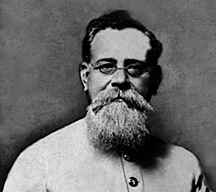
This is a photo of Venustiano Carranza, the former president of the Republic of Mexico, and the author of the Mexican constitution in effect today.
(I am testing new photo upload software... let me know if you like the idea of photo blogs)

Saturday, March 26, 2005
Irony of the Schiavo Debate
The debate over Terri Schiavo's fate has illustrated the strange irony of the two primary perspectives. Those who support Michael Schiavo's decision to remove her feeding tube—I'll call them "A"'s— are generally the same people who are pro-abortion. Those who want her feeding tube replaced—"B"'s— are generally anti-abortion. That part is not very ironic, but the fact that A's are also usually anti-death penalty, and the B's usually pro-death penalty IS ironic.
So the A's support a mother's right to kill her unborn child. And they support the right of one individual to kill another through medical decisions when the wishes of that second individual are not known. [As argued yesterday, I would support the withdrawl of a feeding tube if the wishes were known by more than one person and documented clearly.] However, the A's don't support the killing of convicted murderers.
B's, on the other hand, support the right of the unborn child to life, and they support the right of people in Terri Schiavo's condition to food and water through a feeding tube, at least if no clear record exists of that person's end-of-life wishes are known. B's also support the right of society to rid itself of dangerous criminals who have committed murder or other serious offenses as determined by law.
So the irony is that the A's are all for death as long as it's not a criminal, and the B's are all for life except for those same criminals. In fairness, however, the A's think that they are on the side of individual choice. They believe that the mother's right to choose is more important than the child's right to life, and certainly don't approve of what they see as government intrusion into what they prefer to be only the decision of the mother. And in the case of the criminal, they see the criminal's involuntary death as government intrusion. I have trouble squaring those convergent views.
The B's, on the other hand are willing to accept more government intrusion if it means that a life can be saved. Even if that is a preemptive life saved by the death of a murderer. Consider the recent rape and murder of nine-year-old Jessica Lunsford by a convicted sexual predator.
Is it possible that the A's value choice over life?
This post also appears on Blogger News Network.
So the A's support a mother's right to kill her unborn child. And they support the right of one individual to kill another through medical decisions when the wishes of that second individual are not known. [As argued yesterday, I would support the withdrawl of a feeding tube if the wishes were known by more than one person and documented clearly.] However, the A's don't support the killing of convicted murderers.
B's, on the other hand, support the right of the unborn child to life, and they support the right of people in Terri Schiavo's condition to food and water through a feeding tube, at least if no clear record exists of that person's end-of-life wishes are known. B's also support the right of society to rid itself of dangerous criminals who have committed murder or other serious offenses as determined by law.
So the irony is that the A's are all for death as long as it's not a criminal, and the B's are all for life except for those same criminals. In fairness, however, the A's think that they are on the side of individual choice. They believe that the mother's right to choose is more important than the child's right to life, and certainly don't approve of what they see as government intrusion into what they prefer to be only the decision of the mother. And in the case of the criminal, they see the criminal's involuntary death as government intrusion. I have trouble squaring those convergent views.
The B's, on the other hand are willing to accept more government intrusion if it means that a life can be saved. Even if that is a preemptive life saved by the death of a murderer. Consider the recent rape and murder of nine-year-old Jessica Lunsford by a convicted sexual predator.
Is it possible that the A's value choice over life?
This post also appears on Blogger News Network.
Friday, March 25, 2005
Shiavo
One of the few good things to come out the Shiavo situation is the recognition by many that preparing a personal Health Care Directive for everyone is crucial. Had Ms. Schiavo prepared such a document, we would not be in the mess we find ourselves today. If she had decided that she would not want a feeding tube installed ever, and so stated in a written document such as a HCD, then I would have no issues with her passing as a result. Many people have made such a choice as have I in my own HCD.
I will also add that I believe that the federal government made a mistake in getting involved in what has traditionally been a state and local matter. I believe that we need less federal government involvment in our lives, not more. For the same reason I don't support the No Child Left Behind Act, despite it's good intentions. My father used to say that "The road to Hell is paved with good intentions." Unfortunately, the federal government laid down some asphalt in this matter.
It would also be good to remember these words of Ronald Reagan: "When government expands, liberty contracts."
May God bless Terri Schiavo and her family.
I will also add that I believe that the federal government made a mistake in getting involved in what has traditionally been a state and local matter. I believe that we need less federal government involvment in our lives, not more. For the same reason I don't support the No Child Left Behind Act, despite it's good intentions. My father used to say that "The road to Hell is paved with good intentions." Unfortunately, the federal government laid down some asphalt in this matter.
It would also be good to remember these words of Ronald Reagan: "When government expands, liberty contracts."
May God bless Terri Schiavo and her family.
Wednesday, March 23, 2005
Iraqi Troops in Rout Insurgents
In another stunning defeat for the Iraqi insurgents, Iraqi armed forces backed up by US firepower routed a large group of insurgents, reportedly killing 84 insurgents in the battle. The insurgents had apparently set up an al-Qaeda style training base in a remote area outside of Tikrit.
This cannot be good news for the left.
This cannot be good news for the left.
Tuesday, March 22, 2005
Baghdad Shop Keepers Take Matters Into Their Own Hands
Shopkeepers in Baghdad have decided that enough is enough, or at least that is what appeared to happen today. According to the Traci Carl of the Associate Press (as reported on MyWay.com), shopkeepers took up arms against insurgents who had just shot up cars and people, reportedly injuring three people, including a woman and a child.
Could this be the beginning of the end for the insurgency? I certainly think it marks an important turning point in this campaign. Just the fact that it was reported in the MSM is important. Of course, or illustrious senator Boxer happened to be in Iraq as part a delegation of US dignitaries, and still managed to downplay the success the world has witnessed in Iraq.
The problem for the left is that there are more and more signs that GWB was right and they were wrong. It will be a very interesting future that unfolds throughout the Arab world, and equally interesting how the left responds. Stay tuned.
Could this be the beginning of the end for the insurgency? I certainly think it marks an important turning point in this campaign. Just the fact that it was reported in the MSM is important. Of course, or illustrious senator Boxer happened to be in Iraq as part a delegation of US dignitaries, and still managed to downplay the success the world has witnessed in Iraq.
The problem for the left is that there are more and more signs that GWB was right and they were wrong. It will be a very interesting future that unfolds throughout the Arab world, and equally interesting how the left responds. Stay tuned.
Monday, March 21, 2005
An Update on the Terri Schiavo Case
It occurred to me today while listening to news reports on the Schiavo case that besides the feeding of a baby analogy used in this space yesterday, that there are likely many other people who for one reason or another cannot feed themselves.
Consider a quadraplegic patient, or perhaps someone who has lost their arms or just the use of their arms from injury. How about an elderly patient who has dimentia and cannot be counted on to remember to eat? How about an elderly person who has severe arthritis and cannot even hold a spoon or a straw? Do we withdraw all feeding support in those cases as well?
Consider a quadraplegic patient, or perhaps someone who has lost their arms or just the use of their arms from injury. How about an elderly patient who has dimentia and cannot be counted on to remember to eat? How about an elderly person who has severe arthritis and cannot even hold a spoon or a straw? Do we withdraw all feeding support in those cases as well?
Sunday, March 20, 2005
The Fate of Terri Schiavo
The Terri Schiavo case is a wrenching moral issue. According to several reports I have seen, her condition is one from which she is unlikely to recover, though the remote possibility does exist. The story now revolves around the question of withdrawing a feeding tube that is her sole source of nutrition, as her condition prevents her from feeding herself. Indeed, her condition is called "Persistent Vegetative State", wherein all her cognitive functions, awareness, emotion, etc. have ceased. It is sometimes called "brain-dead", and typically patients in this condition do not recover.
The ethical and moral question of her feeding tube is a difficult one to answer, and for many it is a religious question. Who is to know what she might want in these circumstances were she able to make the decision hereself? Her husband, as I understand it, says that he and she discussed such a situation before she was afflicted and said she would not want to live under these conditions. Her sister and friends, however, argue that she was only 20-something years old when this happened and would never have even discussed death or near-death circumstances.
The fight has pitted her husband against her birth family. He wants to end her 'suffering', though based on what I have recently learned about her condition she really can't be suffering; her brain function isn't capable of feeling pain or awareness. Her birth family has apparently offered to grant him a divorce so he can move on with his life, and would take-on the responsibility of her care completely.
The question of removing her feeding tube is really one that should be stated like this: Since her condition is unlikely to improve, should we stop feeding her and allow her to starve to death? If it was a question about machines keeping her heart beating, or breathing, this would be easier. To remove life support from a heart that otherwise would not beat is morally acceptable to most people. But to stop feeding her is something else completely.
If parents stop feeding their babies, they will die just as surely as Ms. Schiavo will die after her feeding tube is removed. What would happen to parents if they stopped feeding their babies? They would rightly be prosecuted on charges of murder and/or neglect.
If Ms. Schiavo is not suffering—and the medical experts say she cannot—and her birth family says they will bear the entire cost and responsibility of her continued care, how can we as society starve her to death simply because her life has little quality and there little hope of recovery? We can't be certain she won't recover, and we also can't be certain that she doesn't have some sort of awareness, and society should not deny those willing to accept the burden of her care the opportunity to do so. It's the only moral and ethical choice.
The ethical and moral question of her feeding tube is a difficult one to answer, and for many it is a religious question. Who is to know what she might want in these circumstances were she able to make the decision hereself? Her husband, as I understand it, says that he and she discussed such a situation before she was afflicted and said she would not want to live under these conditions. Her sister and friends, however, argue that she was only 20-something years old when this happened and would never have even discussed death or near-death circumstances.
The fight has pitted her husband against her birth family. He wants to end her 'suffering', though based on what I have recently learned about her condition she really can't be suffering; her brain function isn't capable of feeling pain or awareness. Her birth family has apparently offered to grant him a divorce so he can move on with his life, and would take-on the responsibility of her care completely.
The question of removing her feeding tube is really one that should be stated like this: Since her condition is unlikely to improve, should we stop feeding her and allow her to starve to death? If it was a question about machines keeping her heart beating, or breathing, this would be easier. To remove life support from a heart that otherwise would not beat is morally acceptable to most people. But to stop feeding her is something else completely.
If parents stop feeding their babies, they will die just as surely as Ms. Schiavo will die after her feeding tube is removed. What would happen to parents if they stopped feeding their babies? They would rightly be prosecuted on charges of murder and/or neglect.
If Ms. Schiavo is not suffering—and the medical experts say she cannot—and her birth family says they will bear the entire cost and responsibility of her continued care, how can we as society starve her to death simply because her life has little quality and there little hope of recovery? We can't be certain she won't recover, and we also can't be certain that she doesn't have some sort of awareness, and society should not deny those willing to accept the burden of her care the opportunity to do so. It's the only moral and ethical choice.
Friday, March 18, 2005
Global Warming and The Psychology of Leftists
According to Dr. John Ray, a psychometrician from Brisbane, Australia, Leftists are people who are “motivated by strong ego needs -- needs for power, attention, praise and fame. And in the USA and other developed countries they satisfy this need by advocating large changes in the society around them -- thus drawing attention to themselves and hopefully causing themselves to be seen as wise, innovative, caring etc.” Given that analysis, the debate over global warming takes on a wholly new shape.
Those who are the most ardent promoters of the theory of human-induced global warming are Leftists. As a skeptic of global warming, at least the human-induced part of the debate, I have argued elsewhere and passionately that the real objective of global warming believers is to define capitalism and the spread of the pursuit of corporate profits as evil and of destroying our natural resources. However, when viewed through Dr. Ray’s perspective on the motivations and psychology of Leftists, it would seem that their real aim is to create this ‘crisis’ of global warming, and then to come to the rescue of Mankind by banning SUV’s, logging, and other forms of capitalist pursuits. That way, they can be seen as, “wise, innovative, caring etc.” Dr. Ray has also written extensively on this phenomena.
The reasons I remain a skeptic on global warming are many and complex. First, while there is almost no rational person who is arguing that the atmosphere is not currently warming, there is real debate—among scientists—on the cause of the warming. It’s only since 1979 that we have been able to analyze temperature data on a truly global scale using satellite measurements. All previous data relies on surface measurements on land or by ships at sea, or, since 1954 from balloon-measured temperatures. The "reliable" temperature record is usually viewed as being from about 1850, though measurement devices, locations, times, and techniques have varied widely over the decades. As a result, the historical temperature record, the very foundation of global warming theory, is still in dispute.
Second, one of the pillars of the global warming belief is the so-called “Hockey-Stick” temperature analysis cited in the 2nd Assessment Report of the IPCC, (summary) which eventually led to the Kyoto Protocol that recently went into effect. Two Canadian statisticians have analyzed the data and found that the original study used a statistical model that would find a “hockey stick” (the shape of the graph of rising temperatures) in almost any group of random data. The Hockey Stick debate rages on, with the authors of the original study now claiming that it mostly relied on tree ring data from ancient Bristlecone pines in the high deserts of California. If so, then it certainly would seem to me that they are basing their entire argument on the temperature around a few small trees in one very small and remote (even today) area.
OK, so there are other data points to support the position of the global warming believer. They claim that the ice caps are melting at an increasing rate, and that many of the glaciers on mountains such as Kilimanjaro in Africa and Fuji in Japan are retreating in alarming ways. They cite the rise of CO2 in the atmosphere as evidence of human activity and the burning of fossil fuels. They cite evidence of warming oceans and ozone holes, and offer evidence that human activity as the cause. I won't reference these things here since they are readily available in the MSM.
However, there are also competing claims by other scientists who say that all these things can be explained by natural processes. The icecaps have been retreating since at least the end of the last ice age, and an acceleration of the rate of retreat seems to me to be entirely logical given a warming climate, just as ice in your soft drink melts slowly at first, the last few cubes disappear rapidly as the temperature in the glass rises over time. And the retreating glaciers on Mount Kilimanjaro, at least, have also been explained as having local causes related to deforestation, not a change in climate.
The undisputed rise in atmospheric CO2 levels, despite claims by global warming believers as evidence of the burning of fossil fuels, has been shown to follow rising ocean temperatures rather than precede them. Since water has a much higher thermal inertia than does the atmosphere, it takes a tremendous amount of “forcing” to change up or down the temperature of water. I am no scientist, but I am pretty sure that for the atmosphere to be warming the oceans, the atmosphere would need to be very, very, hot, for a very, very long time. The Earth’s surface, remember, is 70% water, and that’s just the top of it. The average depth of the ocean is about 3.2 km (2 miles). That’s a lot of water, and it is constantly churning, upwelling, etc., so to see any change in temperature of the oceans by a warming of the atmosphere seems unlikely to me.
But the oceans do appear to be warming, as some scientists supporting global warming have recently reported. But could there be an alternative to human-induced global warming? Of course! I read recently of increased volcanic activity on the ocean floor as being a strong contender for the cause. That is certainly a more believable alternative, since the thermal inertia of highly dense molten rock at upwards of 1,200ºC (2,192ºF) is much higher than that of our atmosphere.
In addition to the above, there has been lots of scientific work recently on fluctuations in solar output and how that affects atmospheric temperatures. I am no scientist, and all I know is what I read, but I find these competing theories fascinating and, frankly, compelling.
But to get back to the premise of this article, since to me—once again, a non-scientist—the science on global warming is in dispute, I have to wonder about the unusually strong motivations behind those to whom global warming has become almost a religious experience, hence the reference to Dr. Ray’s analysis of Leftists.
Viewing the debate about global warming from this perspective, it seems clear that to the average Leftist, this debate is about much more than global warming. It is about power, control, and ego, and the insatiable need of the Leftist to acquire such things. They are so passionate about their views on this because it not only feeds their addiction, it also comports nicely with their views on capitalism, democracy, socialism, and central control.
Leftists despise capitalism and democracy because these concepts are founded in liberty. Liberty, despite the Leftist’s most fervent claims to the contrary, runs completely counter to everything the Leftist stands for. To achieve their goals of controlling everyone and everything, they must work to eliminate liberty. In the words of Ronald Reagan, “When government expands, liberty contracts.” They have discovered global warming as a very effective weapon in their pursuit of power and influence, and will let nothing and no one get in their way. Those who dare challenge the popular notions of human-induced global warming are held out as heretics and charlatans on the payroll of evil and corrupt corporations who are trashing our environment and impoverishing most of the people of the world.
The debate over global warming has become a great struggle between those who favor liberty and those who favor regulation and central control. We must return the debate to the simple pursuit of scientific truth, regardless of which side of the debate the facts come down on.
If I haven’t mentioned it before, I am not a scientist, but as I have just laid out, the science is not yet settled on global warming, and it probably will not be for years or decades to come. At the same time, I strongly favor careful review of what things we are doing that could adversely affect the environment. We should strengthen environmental laws that are effective and useful, and discard those that have little or no value, or are actually counterproductive. Those regulations that have a significant dollar cost should be carefully evaluated against benefit. I welcome a debate over pollution, as I, like most reasonable people, am strongly in favor of improving our environment and cleaning up polluted areas and protecting most areas that have yet to show much human influence.
Many of the proponents of global warming theory have a much larger agenda than one as simple as ‘saving the planet’. Keep that in mind as you read and hear more on this subject.
[Special thanks to Greenie Watch for so much research into this subject]
This post can also be seen on Blogger News Network.
Those who are the most ardent promoters of the theory of human-induced global warming are Leftists. As a skeptic of global warming, at least the human-induced part of the debate, I have argued elsewhere and passionately that the real objective of global warming believers is to define capitalism and the spread of the pursuit of corporate profits as evil and of destroying our natural resources. However, when viewed through Dr. Ray’s perspective on the motivations and psychology of Leftists, it would seem that their real aim is to create this ‘crisis’ of global warming, and then to come to the rescue of Mankind by banning SUV’s, logging, and other forms of capitalist pursuits. That way, they can be seen as, “wise, innovative, caring etc.” Dr. Ray has also written extensively on this phenomena.
The reasons I remain a skeptic on global warming are many and complex. First, while there is almost no rational person who is arguing that the atmosphere is not currently warming, there is real debate—among scientists—on the cause of the warming. It’s only since 1979 that we have been able to analyze temperature data on a truly global scale using satellite measurements. All previous data relies on surface measurements on land or by ships at sea, or, since 1954 from balloon-measured temperatures. The "reliable" temperature record is usually viewed as being from about 1850, though measurement devices, locations, times, and techniques have varied widely over the decades. As a result, the historical temperature record, the very foundation of global warming theory, is still in dispute.
Second, one of the pillars of the global warming belief is the so-called “Hockey-Stick” temperature analysis cited in the 2nd Assessment Report of the IPCC, (summary) which eventually led to the Kyoto Protocol that recently went into effect. Two Canadian statisticians have analyzed the data and found that the original study used a statistical model that would find a “hockey stick” (the shape of the graph of rising temperatures) in almost any group of random data. The Hockey Stick debate rages on, with the authors of the original study now claiming that it mostly relied on tree ring data from ancient Bristlecone pines in the high deserts of California. If so, then it certainly would seem to me that they are basing their entire argument on the temperature around a few small trees in one very small and remote (even today) area.
OK, so there are other data points to support the position of the global warming believer. They claim that the ice caps are melting at an increasing rate, and that many of the glaciers on mountains such as Kilimanjaro in Africa and Fuji in Japan are retreating in alarming ways. They cite the rise of CO2 in the atmosphere as evidence of human activity and the burning of fossil fuels. They cite evidence of warming oceans and ozone holes, and offer evidence that human activity as the cause. I won't reference these things here since they are readily available in the MSM.
However, there are also competing claims by other scientists who say that all these things can be explained by natural processes. The icecaps have been retreating since at least the end of the last ice age, and an acceleration of the rate of retreat seems to me to be entirely logical given a warming climate, just as ice in your soft drink melts slowly at first, the last few cubes disappear rapidly as the temperature in the glass rises over time. And the retreating glaciers on Mount Kilimanjaro, at least, have also been explained as having local causes related to deforestation, not a change in climate.
The undisputed rise in atmospheric CO2 levels, despite claims by global warming believers as evidence of the burning of fossil fuels, has been shown to follow rising ocean temperatures rather than precede them. Since water has a much higher thermal inertia than does the atmosphere, it takes a tremendous amount of “forcing” to change up or down the temperature of water. I am no scientist, but I am pretty sure that for the atmosphere to be warming the oceans, the atmosphere would need to be very, very, hot, for a very, very long time. The Earth’s surface, remember, is 70% water, and that’s just the top of it. The average depth of the ocean is about 3.2 km (2 miles). That’s a lot of water, and it is constantly churning, upwelling, etc., so to see any change in temperature of the oceans by a warming of the atmosphere seems unlikely to me.
But the oceans do appear to be warming, as some scientists supporting global warming have recently reported. But could there be an alternative to human-induced global warming? Of course! I read recently of increased volcanic activity on the ocean floor as being a strong contender for the cause. That is certainly a more believable alternative, since the thermal inertia of highly dense molten rock at upwards of 1,200ºC (2,192ºF) is much higher than that of our atmosphere.
In addition to the above, there has been lots of scientific work recently on fluctuations in solar output and how that affects atmospheric temperatures. I am no scientist, and all I know is what I read, but I find these competing theories fascinating and, frankly, compelling.
But to get back to the premise of this article, since to me—once again, a non-scientist—the science on global warming is in dispute, I have to wonder about the unusually strong motivations behind those to whom global warming has become almost a religious experience, hence the reference to Dr. Ray’s analysis of Leftists.
Viewing the debate about global warming from this perspective, it seems clear that to the average Leftist, this debate is about much more than global warming. It is about power, control, and ego, and the insatiable need of the Leftist to acquire such things. They are so passionate about their views on this because it not only feeds their addiction, it also comports nicely with their views on capitalism, democracy, socialism, and central control.
Leftists despise capitalism and democracy because these concepts are founded in liberty. Liberty, despite the Leftist’s most fervent claims to the contrary, runs completely counter to everything the Leftist stands for. To achieve their goals of controlling everyone and everything, they must work to eliminate liberty. In the words of Ronald Reagan, “When government expands, liberty contracts.” They have discovered global warming as a very effective weapon in their pursuit of power and influence, and will let nothing and no one get in their way. Those who dare challenge the popular notions of human-induced global warming are held out as heretics and charlatans on the payroll of evil and corrupt corporations who are trashing our environment and impoverishing most of the people of the world.
The debate over global warming has become a great struggle between those who favor liberty and those who favor regulation and central control. We must return the debate to the simple pursuit of scientific truth, regardless of which side of the debate the facts come down on.
If I haven’t mentioned it before, I am not a scientist, but as I have just laid out, the science is not yet settled on global warming, and it probably will not be for years or decades to come. At the same time, I strongly favor careful review of what things we are doing that could adversely affect the environment. We should strengthen environmental laws that are effective and useful, and discard those that have little or no value, or are actually counterproductive. Those regulations that have a significant dollar cost should be carefully evaluated against benefit. I welcome a debate over pollution, as I, like most reasonable people, am strongly in favor of improving our environment and cleaning up polluted areas and protecting most areas that have yet to show much human influence.
Many of the proponents of global warming theory have a much larger agenda than one as simple as ‘saving the planet’. Keep that in mind as you read and hear more on this subject.
[Special thanks to Greenie Watch for so much research into this subject]
This post can also be seen on Blogger News Network.
Monday, March 07, 2005
Social Security Reform
The president's plan to privatize part of Social Security (SS) has been visciously attacked by the Left. Their attack is three-pronged: First, deny that a problem exists; second, instill fear in those retired or soon to retire; and third, frame the debate over privatization as simply a way for the Bush administration to reward the brokerage industry. All of these positions are false, and makes one wonder what the real motivation behind the Left's position on SS reform.
As described on American Thinker, SS was originally intended to be supplemental retirement benefit, accompanying employees regular pension. However, once the Congress realized that SS was taking in far more revenue than it paid out, they realized that the surplus could be used to finance other programs. Ever since, the federal government has been raiding the SS trust fund's surplus and spending it, replacing the spend funds with Treasury bonds, essentially IOU's. It became an income tax on top of the regular income tax.
The idea that part of the revenue stream from SS might go into the hands of individuals and out of reach of the government spenders is the real source of opposition to reform. The picture becomes clearer when you consider that beginning in 2018, the SS trust fund will stop producing a surplus and will need to begin cashing in those IOU's. By 2042 those IOU's will be exhausted as well, and benefits will only be paid at 73¢ on the dollar.
Already our federal budget is severely bloated, and runs huge deficits. Imagine those days beginning in 2018 when we begin to reduce spending in other areas of the budget to replay the IOU's to the SS trust fund? If you think the Democrats are screaming now, just wait until then!
The claims by the Left that there is no crisis is patently false. According to the Social Security and Medicare Board of Trustees annual report for 2004:
"It then begins to increase rapidly and first exceeds the income rate in 2018, producing cash-flow deficits thereafter. Despite these cash-flow deficits, beginning in 2018, redemption of trust fund assets will allow continuation of full benefit payments on a timely basis until 2042, when the trust funds will become exhausted. This redemption process will require a flow of cash from the General Fund of the Treasury. Pressures on the Federal Budget will thus emerge well before 2042. Even if a trust fund's assets are exhausted, however, tax income will continue to flow into the fund. Present tax rates would be sufficient to pay 73 percent of scheduled benefits after trust fund exhaustion in 2042 and 68 percent of scheduled benefits in 2078."
The need to reform SS is real and immediate.
This post can also be found at Blogger News Network.
As described on American Thinker, SS was originally intended to be supplemental retirement benefit, accompanying employees regular pension. However, once the Congress realized that SS was taking in far more revenue than it paid out, they realized that the surplus could be used to finance other programs. Ever since, the federal government has been raiding the SS trust fund's surplus and spending it, replacing the spend funds with Treasury bonds, essentially IOU's. It became an income tax on top of the regular income tax.
The idea that part of the revenue stream from SS might go into the hands of individuals and out of reach of the government spenders is the real source of opposition to reform. The picture becomes clearer when you consider that beginning in 2018, the SS trust fund will stop producing a surplus and will need to begin cashing in those IOU's. By 2042 those IOU's will be exhausted as well, and benefits will only be paid at 73¢ on the dollar.
Already our federal budget is severely bloated, and runs huge deficits. Imagine those days beginning in 2018 when we begin to reduce spending in other areas of the budget to replay the IOU's to the SS trust fund? If you think the Democrats are screaming now, just wait until then!
The claims by the Left that there is no crisis is patently false. According to the Social Security and Medicare Board of Trustees annual report for 2004:
"It then begins to increase rapidly and first exceeds the income rate in 2018, producing cash-flow deficits thereafter. Despite these cash-flow deficits, beginning in 2018, redemption of trust fund assets will allow continuation of full benefit payments on a timely basis until 2042, when the trust funds will become exhausted. This redemption process will require a flow of cash from the General Fund of the Treasury. Pressures on the Federal Budget will thus emerge well before 2042. Even if a trust fund's assets are exhausted, however, tax income will continue to flow into the fund. Present tax rates would be sufficient to pay 73 percent of scheduled benefits after trust fund exhaustion in 2042 and 68 percent of scheduled benefits in 2078."
The need to reform SS is real and immediate.
This post can also be found at Blogger News Network.
Friday, March 04, 2005
Democrats Don't Like the Spreading of Democracy
OpinionJournal.com's James Taranto wrote in this week's Best of the Web Today about a conversation on Comedy Central's "The Daily Show with Jon Stewart" between the host and former Clinton aide Nancy Soderberg regarding the spreading of democracy in the Middle East. As has become painfully obvious to watch, Ms. Soderberg, like so many Democrats, is so desparate to return to power that she would prefer American policy failures, since she sees failure by America as an opportunity for Democrats. It is frankly embarassing to watch Democrats continue to hope for American failure so that they can 'rescue' us from ourselves. They can't stand the idea that the liberation of Iraq and the subsequent enthusiastic vote could well mark the beginning of a new era of democracy in the Arab world.
Already since the vote in Iraq we have seen the people of Lebanon rise up and force the upcoming withdrawl of Syrian forces, the presidential order in Egypt to hold real, democratic elections in that country for the first time ever, and the clear move toward further peace in the Israli-Palestinian conflict. In addition, since the Iraq war Libia has chosen to destroy it's WMD's and move back into the community of nations.
How Democrats could be sad over these developments is beyond reason, except that it is clear that they want, and could actually work for American failure to help them return to power. It is truely sad to see a once-great party turned into such a feable excuse for one today.
Here's an excerpt from Mr. Taranto's analysis of the show:
We've long been skeptical of Jon Stewart, but color us impressed. He managed to ambush this poor woman brutally, in a friendly interview. She was supposed to be promoting her book, and instead he got her to spend the entire interview debunking it (at least if we understood the book's thesis correctly from the very brief discussion of it up top).
She also admitted repeatedly that Democrats are hoping for American failure in the Middle East. To be sure, this is not true of all Democrats, Soderberg speaks only for herself, and she says she is ambivalent ("But as an American . . ."). But we do not question her expertise in assessing the prevailing mentality of her own party. No wonder Dems get so defensive about their patriotism.
Here is an excerpt from the show's transcript (by Taranto):
Soderberg: Well, I think, you know, as a Democrat, you don't want anything nice to happen to the Republicans, and you don't want them to have progress. But as an American, you hope good things would happen. I think the way to look at it is, they can't credit for every good thing that happens, but they need to be able to manage it. I think what's happening in Lebanon is great, but it's not necessarily directly related to the fact that we went into Iraq militarily.
Stewart: Do you think that the people of Lebanon would have had, sort of, the courage of their conviction, having not seen--not only the invasion but the election which followed? It's almost as though that the Iraqi election has emboldened this crazy--something's going on over there. I'm smelling something.
Soderberg: I think partly what's going on is the country next door, Syria, has been controlling them for decades, and they [the Syrians] were dumb enough to blow up the former prime minister of Lebanon in Beirut, and they're--people are sort of sick of that, and saying, "Wait a minute, that's a stretch too far." So part of what's going on is they're just protesting that. But I think there is a wave of change going on, and if we can help ride it though the second term of the Bush administration, more power to them.
Stewart: Do you think they're the guys to--do they understand what they've unleashed? Because at a certain point, I almost feel like, if they had just come out at the very beginning and said, "Here's my plan: I'm going to invade Iraq. We'll get rid of a bad guy because that will drain the swamp"--if they hadn't done the whole "nuclear cloud," you know, if they hadn't scared the pants off of everybody, and just said straight up, honestly, what was going on, I think I'd almost--I'd have no cognitive dissonance, no mixed feelings.
Soderberg: The truth always helps in these things, I have to say. But I think that there is also going on in the Middle East peace process--they may well have a chance to do a historic deal with the Palestinians and the Israelis. These guys could really pull off a whole--
Stewart: This could be unbelievable!
Soderberg:---series of Nobel Peace Prizes here, which--it may well work. I think that, um, it's--
Stewart: [buries head in hands] Oh my God! [audience laughter] He's got, you know, here's--
Soderberg: It's scary for Democrats, I have to say.
Stewart: He's gonna be a great--pretty soon, Republicans are gonna be like, "Reagan was nothing compared to this guy." Like, my kid's gonna go to a high school named after him, I just know it.
Soderberg: Well, there's still Iran and North Korea, don't forget. There's hope for the rest of us.
Stewart: [crossing fingers] Iran and North Korea, that's true, that is true [audience laughter]. No, it's--it is--I absolutely agree with you, this is--this is the most difficult thing for me to--because, I think, I don't care for the tactics, I don't care for this, the weird arrogance, the setting up. But I gotta say, I haven't seen results like this ever in that region.
Soderberg: Well wait. It hasn't actually gotten very far. I mean, we've had--
Stewart: Oh, I'm shallow! I'm very shallow!
Soderberg: There's always hope that this might not work. No, but I think, um, it's--you know, you have changes going on in Egypt; Saudi Arabia finally had a few votes, although women couldn't participate. What's going on here in--you know, Syria's been living in the 1960s since the 1960s--it's, part of this is--
Stewart: You mean free love and that kind of stuff? [audience laughter] Like, free love, drugs?
Soderberg: If you're a terrorist, yeah.
Stewart: They are Baathists, are they--it looks like, I gotta say, it's almost like we're not going to have to invade Iran and Syria. They're gonna invade themselves at a certain point, no? Or is that completely naive?
Soderberg: I think it's moving in the right direction. I'll have to give them credit for that. We'll see.
Stewart: Really? Hummus for everybody, for God's sakes.
Already since the vote in Iraq we have seen the people of Lebanon rise up and force the upcoming withdrawl of Syrian forces, the presidential order in Egypt to hold real, democratic elections in that country for the first time ever, and the clear move toward further peace in the Israli-Palestinian conflict. In addition, since the Iraq war Libia has chosen to destroy it's WMD's and move back into the community of nations.
How Democrats could be sad over these developments is beyond reason, except that it is clear that they want, and could actually work for American failure to help them return to power. It is truely sad to see a once-great party turned into such a feable excuse for one today.
Here's an excerpt from Mr. Taranto's analysis of the show:
We've long been skeptical of Jon Stewart, but color us impressed. He managed to ambush this poor woman brutally, in a friendly interview. She was supposed to be promoting her book, and instead he got her to spend the entire interview debunking it (at least if we understood the book's thesis correctly from the very brief discussion of it up top).
She also admitted repeatedly that Democrats are hoping for American failure in the Middle East. To be sure, this is not true of all Democrats, Soderberg speaks only for herself, and she says she is ambivalent ("But as an American . . ."). But we do not question her expertise in assessing the prevailing mentality of her own party. No wonder Dems get so defensive about their patriotism.
Here is an excerpt from the show's transcript (by Taranto):
Soderberg: Well, I think, you know, as a Democrat, you don't want anything nice to happen to the Republicans, and you don't want them to have progress. But as an American, you hope good things would happen. I think the way to look at it is, they can't credit for every good thing that happens, but they need to be able to manage it. I think what's happening in Lebanon is great, but it's not necessarily directly related to the fact that we went into Iraq militarily.
Stewart: Do you think that the people of Lebanon would have had, sort of, the courage of their conviction, having not seen--not only the invasion but the election which followed? It's almost as though that the Iraqi election has emboldened this crazy--something's going on over there. I'm smelling something.
Soderberg: I think partly what's going on is the country next door, Syria, has been controlling them for decades, and they [the Syrians] were dumb enough to blow up the former prime minister of Lebanon in Beirut, and they're--people are sort of sick of that, and saying, "Wait a minute, that's a stretch too far." So part of what's going on is they're just protesting that. But I think there is a wave of change going on, and if we can help ride it though the second term of the Bush administration, more power to them.
Stewart: Do you think they're the guys to--do they understand what they've unleashed? Because at a certain point, I almost feel like, if they had just come out at the very beginning and said, "Here's my plan: I'm going to invade Iraq. We'll get rid of a bad guy because that will drain the swamp"--if they hadn't done the whole "nuclear cloud," you know, if they hadn't scared the pants off of everybody, and just said straight up, honestly, what was going on, I think I'd almost--I'd have no cognitive dissonance, no mixed feelings.
Soderberg: The truth always helps in these things, I have to say. But I think that there is also going on in the Middle East peace process--they may well have a chance to do a historic deal with the Palestinians and the Israelis. These guys could really pull off a whole--
Stewart: This could be unbelievable!
Soderberg:---series of Nobel Peace Prizes here, which--it may well work. I think that, um, it's--
Stewart: [buries head in hands] Oh my God! [audience laughter] He's got, you know, here's--
Soderberg: It's scary for Democrats, I have to say.
Stewart: He's gonna be a great--pretty soon, Republicans are gonna be like, "Reagan was nothing compared to this guy." Like, my kid's gonna go to a high school named after him, I just know it.
Soderberg: Well, there's still Iran and North Korea, don't forget. There's hope for the rest of us.
Stewart: [crossing fingers] Iran and North Korea, that's true, that is true [audience laughter]. No, it's--it is--I absolutely agree with you, this is--this is the most difficult thing for me to--because, I think, I don't care for the tactics, I don't care for this, the weird arrogance, the setting up. But I gotta say, I haven't seen results like this ever in that region.
Soderberg: Well wait. It hasn't actually gotten very far. I mean, we've had--
Stewart: Oh, I'm shallow! I'm very shallow!
Soderberg: There's always hope that this might not work. No, but I think, um, it's--you know, you have changes going on in Egypt; Saudi Arabia finally had a few votes, although women couldn't participate. What's going on here in--you know, Syria's been living in the 1960s since the 1960s--it's, part of this is--
Stewart: You mean free love and that kind of stuff? [audience laughter] Like, free love, drugs?
Soderberg: If you're a terrorist, yeah.
Stewart: They are Baathists, are they--it looks like, I gotta say, it's almost like we're not going to have to invade Iran and Syria. They're gonna invade themselves at a certain point, no? Or is that completely naive?
Soderberg: I think it's moving in the right direction. I'll have to give them credit for that. We'll see.
Stewart: Really? Hummus for everybody, for God's sakes.
Sunday, February 20, 2005
Part-Time Legislatures
California governor Arnold Schwarzenegger wants to break the grip of special interests and the political parties on the state legislature by returning the legislature to a part-time schedule from the full-time schedule it currently holds.
A part-time legislature will also help return democracy to goverment. By making the legislature a part-time body, legislators will need to also have 'real' jobs when not in session. Since the legislature would revert to part-time status, they could be paid considerably less, and as well their paid staff expenses would be less. Most importantly, the legislature would have less time to create new regulation, and less time to overspend the people's tax money. It's certainly not a lock on getting government spending under control, but it will definitely help.
This may seem like a radical proposal, but we need only review the US Constitution to see that the framers of that document clearly envisioned only a part-time, citizen legislature. Article 1, Section 4, Clause 2 states:
"The Congress shall assemble at least once in every Year, and such Meeting shall be on the first Monday in December, unless they shall by Law appoint a different Day."
This clause was modified in 1933 by the 20th Amendment to read, "The Congress shall assemble at least once in every year, and such meeting shall begin at noon on the 3d day of January, unless they shall by law appoint a different day."
The framers, and later Congress and the states affirmed through passage of the 20th Amendment, the clear intent that the Congress "shall assemble at least once in every year". Twice has the idea of a part-time legislature been formalized in the Constitution. In fact, reading this passage suggests that the framers, and possibly the later Congress who proposed a modification to it, foresaw a legislature that met FOR ONE DAY only!
Another benefit of a part-time legislature is the idea of "citizen goverment". The framers clearly wanted the legislature to be comprised of average citizens. The "consent of the governed" is also codified in the Constitution, and the idea was that We the People would meet each year to write the laws underwhich we agreed to live. The executive branch, as its name implies, would 'execute' these laws, either as president of the United States or as a state governor.
If the framers could see our now-professional legislatures, they would be shocked.
[This post was also posted at Blogger News Network.]
A part-time legislature will also help return democracy to goverment. By making the legislature a part-time body, legislators will need to also have 'real' jobs when not in session. Since the legislature would revert to part-time status, they could be paid considerably less, and as well their paid staff expenses would be less. Most importantly, the legislature would have less time to create new regulation, and less time to overspend the people's tax money. It's certainly not a lock on getting government spending under control, but it will definitely help.
This may seem like a radical proposal, but we need only review the US Constitution to see that the framers of that document clearly envisioned only a part-time, citizen legislature. Article 1, Section 4, Clause 2 states:
"The Congress shall assemble at least once in every Year, and such Meeting shall be on the first Monday in December, unless they shall by Law appoint a different Day."
This clause was modified in 1933 by the 20th Amendment to read, "The Congress shall assemble at least once in every year, and such meeting shall begin at noon on the 3d day of January, unless they shall by law appoint a different day."
The framers, and later Congress and the states affirmed through passage of the 20th Amendment, the clear intent that the Congress "shall assemble at least once in every year". Twice has the idea of a part-time legislature been formalized in the Constitution. In fact, reading this passage suggests that the framers, and possibly the later Congress who proposed a modification to it, foresaw a legislature that met FOR ONE DAY only!
Another benefit of a part-time legislature is the idea of "citizen goverment". The framers clearly wanted the legislature to be comprised of average citizens. The "consent of the governed" is also codified in the Constitution, and the idea was that We the People would meet each year to write the laws underwhich we agreed to live. The executive branch, as its name implies, would 'execute' these laws, either as president of the United States or as a state governor.
If the framers could see our now-professional legislatures, they would be shocked.
[This post was also posted at Blogger News Network.]
Saturday, February 19, 2005
Racism, the GOP, and the Democratic Party
Deroy Murdock writes in Friday's National Review Online to describe the awful history of Democrats and racism. More importantly, he writes as we did in this space here and here several months ago how the Republican party was founded on the concept of protecting the rights of blacks in America. The Democrat party has been working feverishly since the 1960's to try to re-write their racist past. Mr. Murdock goes a long way to reverse that thinking. An excerpt:
Today marks the 90th anniversary of a very special White House ceremony. President Woodrow Wilson [Democrat] hosted his Cabinet and the entire U.S. Supreme Court for a screening of D. W. Griffith's racist masterpiece, Birth of a Nation. The executive mansion's first film presentation depicted, according to Griffith, the Ku Klux Klan's heroic, post-Civil War struggle against the menace of emancipated blacks, portrayed by white actors in black face. As black civil-rights leader W.E.B. DuBois explained: In Griffith's 1915 motion picture, "The freed man was represented either as an ignorant fool, a vicious rapist, a venal or unscrupulous politician, or a faithful idiot."
Here is the entire article.
Today marks the 90th anniversary of a very special White House ceremony. President Woodrow Wilson [Democrat] hosted his Cabinet and the entire U.S. Supreme Court for a screening of D. W. Griffith's racist masterpiece, Birth of a Nation. The executive mansion's first film presentation depicted, according to Griffith, the Ku Klux Klan's heroic, post-Civil War struggle against the menace of emancipated blacks, portrayed by white actors in black face. As black civil-rights leader W.E.B. DuBois explained: In Griffith's 1915 motion picture, "The freed man was represented either as an ignorant fool, a vicious rapist, a venal or unscrupulous politician, or a faithful idiot."
Here is the entire article.
The 2004 Elections are still going on in some places
For most of the country the election of last November is long over. However, there are a couple of places where it continues. We've been following the election "contest" in the Washington state governors race, wherein the election first won in several recounts by the Republican Dino Rossi, but then lost to the Democrat Christine Gregoire in the final hand recount. Rossi filed an contest of the election based on lost of troubling election problems. SoundPolitics seems to be a reasonably good source of information, albeit from a Republican point of view. It seems to us at the LTS that the liberal side of the disagreement is trying to ignore the election contest and hope it just blows over. It seems like they hope that the longer Gregoire is in office the more legitimate she'll become in the eyes of voters. But according to polling data, something like 60% of Washington voters want a re-vote.
Here in southern California we have similar election situations. In Oceanside, a small coastal city in northern San Diego County, one of the sitting council members won the mayoral race, leaving an open seat on the council. Since then the debate was centered on appointing a replacement or holding a special election. Some argued that the third-place vote getter in the two other council-seat races should be appointed, thus avoiding an expensive special election. Others favored letting the people decide in a special election, especially since fully two years remain on the vacant term. In the end, the now four-member council deadlocked 2-2 on all prospective appointees, forcing the special election. The fact that they could not decide clearly seems to us to justify the special election. Small town politics are sometimes the nastiest, and Oceanside, while over 170,000 in population, has certainly got some politics and back-room deal making going on! It should be interesting to see how the the campaign, and the election plays out in June.
In San Diego, the mayoral race was decided by about 2,000 votes in a city of 1.25 million residents. The dispute was over a write-in candidate in the general election. First, the city charter prohibits write-in's in the general election, to ensure that only two candidates appear on the ballot so that one is assured a majority. The city election ordinance, however, conflicts with the charter on this point. A post-election challenge to the viability of the write-in candidate was denied, since the challenge was filed AFTER the election. There was a second challenge since the vote tally fell in favor of the write-in, if ballots incorrectly marked were counted. The courts ruled that the ballots shall NOT be counted, because state law is very clear on this point. However, appeals are likely since the Democrats backing the write-in think the "intent of the voter" should be paramount despite the law. No one realistically expects the appeals to prevail, however, they will go forward.
Here in southern California we have similar election situations. In Oceanside, a small coastal city in northern San Diego County, one of the sitting council members won the mayoral race, leaving an open seat on the council. Since then the debate was centered on appointing a replacement or holding a special election. Some argued that the third-place vote getter in the two other council-seat races should be appointed, thus avoiding an expensive special election. Others favored letting the people decide in a special election, especially since fully two years remain on the vacant term. In the end, the now four-member council deadlocked 2-2 on all prospective appointees, forcing the special election. The fact that they could not decide clearly seems to us to justify the special election. Small town politics are sometimes the nastiest, and Oceanside, while over 170,000 in population, has certainly got some politics and back-room deal making going on! It should be interesting to see how the the campaign, and the election plays out in June.
In San Diego, the mayoral race was decided by about 2,000 votes in a city of 1.25 million residents. The dispute was over a write-in candidate in the general election. First, the city charter prohibits write-in's in the general election, to ensure that only two candidates appear on the ballot so that one is assured a majority. The city election ordinance, however, conflicts with the charter on this point. A post-election challenge to the viability of the write-in candidate was denied, since the challenge was filed AFTER the election. There was a second challenge since the vote tally fell in favor of the write-in, if ballots incorrectly marked were counted. The courts ruled that the ballots shall NOT be counted, because state law is very clear on this point. However, appeals are likely since the Democrats backing the write-in think the "intent of the voter" should be paramount despite the law. No one realistically expects the appeals to prevail, however, they will go forward.
Friday, February 18, 2005
New Study throws a wrench in the "global warming skeptic" point of view
A new study by a group of scientists at the Scripps Institute of Oceanography says that global warming is real, and its strongest effects can be seen in the oceans, not the atmosphere.
If this study can withstand scrutiny, it surely 'throws a wrench' into the argument by skeptics on the subject. I haven't had a chance to review the report nor any reviews of the report, but on the face of it, it seems likely to bring around those (like me) who have been highly skeptical of global warming.
Here is a link.
If this study can withstand scrutiny, it surely 'throws a wrench' into the argument by skeptics on the subject. I haven't had a chance to review the report nor any reviews of the report, but on the face of it, it seems likely to bring around those (like me) who have been highly skeptical of global warming.
Here is a link.
Thursday, February 17, 2005
Global Warming article from the Wall Street Journal
No time for comment now, but saw this long article worthy of reading.
***UPDATE***
The above is a great article (via Greenie Watch) that does an excellent job of illustrating the Hockey Stick debate (see my posts below as well).
Given that today the Kyoto Protocols take effect, it would also be wise to consider what Kyoto really is: a wealth transfer from the rich nations to the poor. The countries who have the most, and pollute the most are being asked to spend billions of dollars to clean up, while the poorest nations can continue to pollute. The root of the debate about global warming, at least politically, is money.
***UPDATE***
The above is a great article (via Greenie Watch) that does an excellent job of illustrating the Hockey Stick debate (see my posts below as well).
Given that today the Kyoto Protocols take effect, it would also be wise to consider what Kyoto really is: a wealth transfer from the rich nations to the poor. The countries who have the most, and pollute the most are being asked to spend billions of dollars to clean up, while the poorest nations can continue to pollute. The root of the debate about global warming, at least politically, is money.
Southern Ocean Changes
A multinational team of scientists have discovered significant changes in salinity and temperature of the southern ocean, according to a recent article on Yahoo.com. Using a network of free-floating submersible measurement robots, the scientific team surveyed roughly 3,000 square kilometers of the southern ocean to measure deep water temperature and salinity.
The team leader, Australian Steve Lintour, described how the deep water of the southern ocean was found to be much colder and less salty that ten years prior. The Yahoo article quotes Mr. Lintour as saying,
"Ocean circulation is a big influence on global climate, so it is critical that we understand why this is happening and why it is happening so quickly," Rintoul said after he and his team docked at Hobart on the Australian island state of Tasmania.
"The surprise was just how rapidly the deepest parts of the ocean are changing, at depths of four or five kilometers (13,200-16,500 feet) below the sea surface," Rintoul said.
"Whether its a natural cycle that takes place over many decades, or it's climate change, it's an indication that the deep ocean can respond much more rapidly to changes that are happening near the surface than we believed possible," he said. "
It is not clear, according to Mr. Lintour, if the changes seen in the ocean temperatures or salinity levels are human-induced changes or part of a normal cycle.
From our high school science classes we all remember the concept of "thermal inertia", which is the ability of a body to resist rapid changes in temperature. Water has a very good thermal inertia, so whatever is the cause of this may be something big and interesting. On the other hand, it may simply be the natural cycling of currents that we are only not beginning to recognize. Just like global warming.
Another point to consider (You knew I couldn't resist!) is that it seems to be well-established science that the oceans 'drive' the atmospheric weather, not the reverse. In other words, the oceans influence the atmosphere by a far larger degree than the atmosphere influences the ocean. That makes sense since the thermal inertial of air is significantly lower than the thermal inertia of water.
As you know if you've read my previous posts, I am a global warming skeptic, and data such as this fuels my skepticism.
The team leader, Australian Steve Lintour, described how the deep water of the southern ocean was found to be much colder and less salty that ten years prior. The Yahoo article quotes Mr. Lintour as saying,
"Ocean circulation is a big influence on global climate, so it is critical that we understand why this is happening and why it is happening so quickly," Rintoul said after he and his team docked at Hobart on the Australian island state of Tasmania.
"The surprise was just how rapidly the deepest parts of the ocean are changing, at depths of four or five kilometers (13,200-16,500 feet) below the sea surface," Rintoul said.
"Whether its a natural cycle that takes place over many decades, or it's climate change, it's an indication that the deep ocean can respond much more rapidly to changes that are happening near the surface than we believed possible," he said. "
It is not clear, according to Mr. Lintour, if the changes seen in the ocean temperatures or salinity levels are human-induced changes or part of a normal cycle.
From our high school science classes we all remember the concept of "thermal inertia", which is the ability of a body to resist rapid changes in temperature. Water has a very good thermal inertia, so whatever is the cause of this may be something big and interesting. On the other hand, it may simply be the natural cycling of currents that we are only not beginning to recognize. Just like global warming.
Another point to consider (You knew I couldn't resist!) is that it seems to be well-established science that the oceans 'drive' the atmospheric weather, not the reverse. In other words, the oceans influence the atmosphere by a far larger degree than the atmosphere influences the ocean. That makes sense since the thermal inertial of air is significantly lower than the thermal inertia of water.
As you know if you've read my previous posts, I am a global warming skeptic, and data such as this fuels my skepticism.
Wednesday, February 16, 2005
The Global Warming Debate Rages On
I know, I know... you're all getting tired of hearing about global warming. But this subject is just too important to let it go. Just like with the Vietnam war, where the mainstream media (MSM) told us one thing, but the truth was something different, you'll think that human activity is solely responsible for global warming if you listen solely to the MSM. While no one here at the LTS is a scientist, and certainly I am not, we remain skeptics (if you haven't already figured that out) on the subject.
It would be so much easier to simply shut up and go along with the mainstream view on this, but I get very suspicous of 'coincidences'. The fact that those who see humans and our capitalistic society as evil and wrong now have this convenient tool to use to try to bring down all that we have built. That is just too coincidental for me. I don't know for sure that global warming isn't caused by human activity, and it seems logical that we contribute to it.
For that matter, if anyone wants to have a discussion on ways to cut the levels of pollutants we put into the environment, I am ready. I want a clean environment as much as anyone, but it should be done in a reasonable and responsible way. To try to shout down opposition to the prevailing view of the causes of global warming, as it seems so many are want to do is irresponsible at the least. To not question the veracity of science is also irresponsible. Many scientists in the field of climate change DO question the veracity of the prevailing view, and part of our purpose here at the LTS is to try to bring those points of view into focus.
Once such view we saw recently supports our skepticism: (Via Greenie Watch)
At a recent global warming conference in Exeter called by UK prime minister Tony Blair, all the usual fears were aired. Yet real debate about climate change seems to be strictly prohibited.
The week before, another conference organised by the Scientific Alliance at London's Royal Institution raised critical questions about the global warming thesis. This time the Royal Society's president Sir Bob May received frontpage coverage for arguing that the event would be biased and dangerous.
'On one hand we have the IPCC [Intergovernmental Panel on Climate Change], the rest of the world's major scientific organisations, and the government's chief scientific adviser, all pointing to the need to cut emissions', he wrote. 'On the other we have a small band of sceptics, including lobbyists funded by the US oil industry, a sci-fi writer, and the Daily Mail, who deny the scientists are right. It is reminiscent of the tobacco lobby's attempts to persuade us that smoking does not cause lung cancer. There is no danger this lobby will influence the scientists. But they don't need to. It is the influence on the media that is so poisonous.' (1)
But in fact, those labelled 'sceptics' and those regarded as 'mainstream' actually share much in common. Professor Richard Lindzen of Massachusetts Institute of Technology (MIT), usually regarded as a sceptic but also a lead author for the IPCC, agrees that there is consensus among scientists. That consensus is as follows:
1. While there are inconsistencies in the temperature data, it is very likely that the world has got a bit warmer over the past 100 years - 0.6 degrees Celsius, on average, give or take 0.2 degrees either way.
2. That carbon dioxide is a greenhouse gas. The more carbon dioxide in the atmosphere, the warmer the world will tend to get.
3. That human activity has led to a significant increase in carbon dioxide levels, from 280 parts per million in the centuries before 1750, to 380 parts per million now.
4. Economic trends will tend to further increase carbon dioxide levels - so it is very plausible that the world will get warmer in the coming decades, all other things being equal.
Here is the whole article.
It would be so much easier to simply shut up and go along with the mainstream view on this, but I get very suspicous of 'coincidences'. The fact that those who see humans and our capitalistic society as evil and wrong now have this convenient tool to use to try to bring down all that we have built. That is just too coincidental for me. I don't know for sure that global warming isn't caused by human activity, and it seems logical that we contribute to it.
For that matter, if anyone wants to have a discussion on ways to cut the levels of pollutants we put into the environment, I am ready. I want a clean environment as much as anyone, but it should be done in a reasonable and responsible way. To try to shout down opposition to the prevailing view of the causes of global warming, as it seems so many are want to do is irresponsible at the least. To not question the veracity of science is also irresponsible. Many scientists in the field of climate change DO question the veracity of the prevailing view, and part of our purpose here at the LTS is to try to bring those points of view into focus.
Once such view we saw recently supports our skepticism: (Via Greenie Watch)
At a recent global warming conference in Exeter called by UK prime minister Tony Blair, all the usual fears were aired. Yet real debate about climate change seems to be strictly prohibited.
The week before, another conference organised by the Scientific Alliance at London's Royal Institution raised critical questions about the global warming thesis. This time the Royal Society's president Sir Bob May received frontpage coverage for arguing that the event would be biased and dangerous.
'On one hand we have the IPCC [Intergovernmental Panel on Climate Change], the rest of the world's major scientific organisations, and the government's chief scientific adviser, all pointing to the need to cut emissions', he wrote. 'On the other we have a small band of sceptics, including lobbyists funded by the US oil industry, a sci-fi writer, and the Daily Mail, who deny the scientists are right. It is reminiscent of the tobacco lobby's attempts to persuade us that smoking does not cause lung cancer. There is no danger this lobby will influence the scientists. But they don't need to. It is the influence on the media that is so poisonous.' (1)
But in fact, those labelled 'sceptics' and those regarded as 'mainstream' actually share much in common. Professor Richard Lindzen of Massachusetts Institute of Technology (MIT), usually regarded as a sceptic but also a lead author for the IPCC, agrees that there is consensus among scientists. That consensus is as follows:
1. While there are inconsistencies in the temperature data, it is very likely that the world has got a bit warmer over the past 100 years - 0.6 degrees Celsius, on average, give or take 0.2 degrees either way.
2. That carbon dioxide is a greenhouse gas. The more carbon dioxide in the atmosphere, the warmer the world will tend to get.
3. That human activity has led to a significant increase in carbon dioxide levels, from 280 parts per million in the centuries before 1750, to 380 parts per million now.
4. Economic trends will tend to further increase carbon dioxide levels - so it is very plausible that the world will get warmer in the coming decades, all other things being equal.
Here is the whole article.
Put your money where your votes are
We saw a new website organized by our friends on the Left listing companies they feel are either "Blue" or "Red", like "Blue states" or "Red States" from the past election. They want you to ony patronize "blue" companies, but people of all political stripes can use the list to buy either Red, Blue, or in between.
We'll leave it to you to decide.
We'll leave it to you to decide.
Tuesday, February 15, 2005
The Bush tax cuts are working
William P. Kucewisz writes in today's National Review Online a very interesting article describing how the Bush tax cuts, particularly the June, 2003 cuts, rallied the capital markets and generated big increases in investments. He reports that "net nonresidential capital formation has risen 63%" since the enaction of the June 2003 tax cuts.
Here is his opening paragraph:
"The Bush tax cuts of 2 years ago continue to lay the foundation for a prolonged economic expansion, owing to a conspicuous shift in private expenditures from consumption to investment. The June 2003 tax cuts, in fact, are functioning precisely as promised — boosting GDP to the benefit of all Americans, regardless of income. It’s one of the marvels of supply-side fiscal policy. By raising the incentive to invest, marginal tax-rate reductions augment the ratio of financial capital to labor capital, thus raising labor productivity and, in turn, accelerating growth."
He compares this phenominal growth to those of the Clinton years, writing,
"Since mid-2003, annualized nonresidential capital growth has averaged nearly 30 percent, far surpassing the Clinton-era mean of 13 percent and the 1946-2004 norm of 8 percent."
He also mentions one our favorite topics, that the information technology boom of the 1990's, and the subsequent capital investment made by industry, not the Clinton tax increases of 1993 that brought about the "boom" of the 1990's, writing,
"The pronounced rise in net private nonresidential capital formation in the 7-year period commencing in 1993 wasn’t initiated by the Clinton tax hikes of that year, which eventually caused federal revenues to exceed 21.1 percent of nominal GDP, an all-time high, versus a 1946-2004 mean of 18.1 percent. The investment boom of the 1990s was instead initiated by an exogenous factor — i.e., the IT revolution. A mighty Schumpeterian gale swept across the business world in the form of PCs, the Internet, and other information technology. Competitive pressures demanded that businesses invest heavily in IT. Ergo, private fixed non-housing investment climbed in the last decade despite the 1993 tax increases."
He added this:
"Democrats, however, aided by a pliant (and largely economically illiterate) Washington press corps, continue to foist the fiction that the Clinton tax hikes produced the 1990s boom by closing the federal budget deficit. This is patent nonsense. For a start, they’ve got the cause-effect deficit-GDP relationship backwards: The deficit closed because economic growth quickened, not the other way ’round."
Read the whole article here.
Here is his opening paragraph:
"The Bush tax cuts of 2 years ago continue to lay the foundation for a prolonged economic expansion, owing to a conspicuous shift in private expenditures from consumption to investment. The June 2003 tax cuts, in fact, are functioning precisely as promised — boosting GDP to the benefit of all Americans, regardless of income. It’s one of the marvels of supply-side fiscal policy. By raising the incentive to invest, marginal tax-rate reductions augment the ratio of financial capital to labor capital, thus raising labor productivity and, in turn, accelerating growth."
He compares this phenominal growth to those of the Clinton years, writing,
"Since mid-2003, annualized nonresidential capital growth has averaged nearly 30 percent, far surpassing the Clinton-era mean of 13 percent and the 1946-2004 norm of 8 percent."
He also mentions one our favorite topics, that the information technology boom of the 1990's, and the subsequent capital investment made by industry, not the Clinton tax increases of 1993 that brought about the "boom" of the 1990's, writing,
"The pronounced rise in net private nonresidential capital formation in the 7-year period commencing in 1993 wasn’t initiated by the Clinton tax hikes of that year, which eventually caused federal revenues to exceed 21.1 percent of nominal GDP, an all-time high, versus a 1946-2004 mean of 18.1 percent. The investment boom of the 1990s was instead initiated by an exogenous factor — i.e., the IT revolution. A mighty Schumpeterian gale swept across the business world in the form of PCs, the Internet, and other information technology. Competitive pressures demanded that businesses invest heavily in IT. Ergo, private fixed non-housing investment climbed in the last decade despite the 1993 tax increases."
He added this:
"Democrats, however, aided by a pliant (and largely economically illiterate) Washington press corps, continue to foist the fiction that the Clinton tax hikes produced the 1990s boom by closing the federal budget deficit. This is patent nonsense. For a start, they’ve got the cause-effect deficit-GDP relationship backwards: The deficit closed because economic growth quickened, not the other way ’round."
Read the whole article here.
Wednesday, February 09, 2005
The "Hockey Stick" debate again
John Ray at Greenie Watch has a great link to the debate about the Hockey Stick debate. It seems that the two Canadians we discussed here have been having a quite a debate about the whole matter with the original author of the study that described the "Hockey Stick", which has become the linchpin for the IPCC papers and the very foundation of the prevailing view of global warming. Dr. Ray sums it up nicely:
The original hockey-stick team now seem to be ignoring most of the data and hanging their whole case on a single sample of long-lived desert trees -- bristlecone pines. That what happens in one desert might not represent the whole climate of the earth is obvious to anyone who knows how great regional climate variations can be. Due to local effects, one place can be cooling while the other is warming and vice versa.
Obviously, we are not scientists, but we are struck by the fact that the author of the original Hockey Stick study, Michael Mann, who publishes at Realclimate.org, seem to attack their critics above for being statisticians, not scientists. However, their criticisms are how the data was analysed statistically, their field of expertise!
Here is a link to the original work.
The original hockey-stick team now seem to be ignoring most of the data and hanging their whole case on a single sample of long-lived desert trees -- bristlecone pines. That what happens in one desert might not represent the whole climate of the earth is obvious to anyone who knows how great regional climate variations can be. Due to local effects, one place can be cooling while the other is warming and vice versa.
Obviously, we are not scientists, but we are struck by the fact that the author of the original Hockey Stick study, Michael Mann, who publishes at Realclimate.org, seem to attack their critics above for being statisticians, not scientists. However, their criticisms are how the data was analysed statistically, their field of expertise!
Here is a link to the original work.
Saturday, February 05, 2005
Social Security Reforms
We are astonished over the amount of fear and consternation from the Left on the president's proposed reforms to Social Security (SS). It was just a few years ago, in fact, that the Left was shouting about the need to "save SS". They complained, especially Al Gore during his failed presidential campaign in 2000, about the need for a "lockbox" for SS, and that the system would be broke for future generations if major reforms were not undertaken. It seems clear that his concerns were mostly for raids from the Treasury, but there was also the strong message that the system in general was 'broken' and needed fixing.
Now that the Democrats are even further out of power, however, they claim that the system is NOT broken. Their fear, of course, is that now they don't have much power to stop any reforms that might wind their way through the halls of Congress and to the president's desk. They don't want the Republicans, and especially not George Bush to be able to take the credit for reforms that might actually work, as that would further erode their claim to be the protectors of SS from the 'evils of capitalism'.
Let's face it, the reforms proposed by the president are mild; Allow middle aged and younger worker the opportunity—if they CHOOSE—to divert up to 1/3rd of their 6.2% payroll tax for SS into private accounts. The amount of money is capped at only $1,000 in 2009, and will raise by about $100 each year thereafter.
The plan itself would work like the Thrift Savings Plan, which has been available to federal employees for years and is like a 401-k plan. There are several investment choices, diversified like mutual funds, and even includes a fund that invests in more conservative holdings as the worker approaches retirement.
Apparently many people are afraid of investing, and know little about it. That is hard for us at the LTS to believe, given the amount of information available to the average person these days. Most of us who work have some sort of a 401-k plan available through our employers, and IRA's have been around now for almost 20 years. The internet, which brings you this incredibly informative space, is loaded with financial advice, information, and results. Free seminars on investing are everywhere. There is no excuse for not being informed on the ins and outs of investing basics.
We support a plan that allows workers to invest part or all of their payroll taxes for SS into private accounts, and will monitor the debate and report facts and offer opinions on what is being proposed.
Now that the Democrats are even further out of power, however, they claim that the system is NOT broken. Their fear, of course, is that now they don't have much power to stop any reforms that might wind their way through the halls of Congress and to the president's desk. They don't want the Republicans, and especially not George Bush to be able to take the credit for reforms that might actually work, as that would further erode their claim to be the protectors of SS from the 'evils of capitalism'.
Let's face it, the reforms proposed by the president are mild; Allow middle aged and younger worker the opportunity—if they CHOOSE—to divert up to 1/3rd of their 6.2% payroll tax for SS into private accounts. The amount of money is capped at only $1,000 in 2009, and will raise by about $100 each year thereafter.
The plan itself would work like the Thrift Savings Plan, which has been available to federal employees for years and is like a 401-k plan. There are several investment choices, diversified like mutual funds, and even includes a fund that invests in more conservative holdings as the worker approaches retirement.
Apparently many people are afraid of investing, and know little about it. That is hard for us at the LTS to believe, given the amount of information available to the average person these days. Most of us who work have some sort of a 401-k plan available through our employers, and IRA's have been around now for almost 20 years. The internet, which brings you this incredibly informative space, is loaded with financial advice, information, and results. Free seminars on investing are everywhere. There is no excuse for not being informed on the ins and outs of investing basics.
We support a plan that allows workers to invest part or all of their payroll taxes for SS into private accounts, and will monitor the debate and report facts and offer opinions on what is being proposed.
Friday, February 04, 2005
How do you like our new look?
The Lost Tooth Society felt that a change was in order, so we downloaded a new blog template, modified it to meet our needs, and viola, here it is! We hope you like its easier-reading style, plus for all you "linkers", we now feature "permalinks", where you can link directly to a post.
Let us know ho you like it!
Let us know ho you like it!
Tuesday, February 01, 2005
Still More on Global Warming
Greenie Watch has some great links on global warming, specifically dealing with the "hockey stick" debate. "The Hockey Stick", for those of you who haven't followed so closely the debate on global warming, refers to a study from the late 1990's describing the rise of global temperatures as a hockey stick laid on its side with the blade at the right, and pointing up. The long, flat stick portion is the state of global temperature for the last 1,000 years, and the blade, where the line spikes up dramatically, is the years since the Industrial Revolution in the late 1800's. This study is the very foundation of the common view of global warming, hence anything that undermines it is a threat to the global warming lobby.
Recently two Canadians have been publishing new examinations of the underlying data used to create the Hockey Stick that show serious flaws in the math, which is discussed in more detail HERE.
Here's an excerpt:
The hockey-stick image has appeared in countless documents and hundreds of speeches. The opening graphic in the recently-published Arctic Climate Impact Assessment report reproduces the Mann chart as the main springboard to hundreds of pages on climate risks in the Arctic. It is also the core justification for the Kyoto Protocol, which comes into effect on Feb. 16.
Until now, criticisms of the hockey stick have been dismissed as fringe reports from marginal global warming skeptics. Today, however, the critical work of two Canadian researchers, Ross McKitrick, an economics professor at Guelph University, and Toronto consultant Stephen McIntyre, will be published by Geophysical Research Letters, the prestigious journal that published one of the early versions of Michael Mann's 1,000-year tracking of Northern Hemisphere temperatures,
Publication in Geophysical Research sets McIntyre and McKitrick's analysis and conclusions in direct opposition to the Mann research. Their criticism can no longer be dismissed as if it were untested research posted on obscure Web sites by crank outsiders. Their work is now a full challenge to the dominant theme of the entire climate and global warming movement.
Recently two Canadians have been publishing new examinations of the underlying data used to create the Hockey Stick that show serious flaws in the math, which is discussed in more detail HERE.
Here's an excerpt:
The hockey-stick image has appeared in countless documents and hundreds of speeches. The opening graphic in the recently-published Arctic Climate Impact Assessment report reproduces the Mann chart as the main springboard to hundreds of pages on climate risks in the Arctic. It is also the core justification for the Kyoto Protocol, which comes into effect on Feb. 16.
Until now, criticisms of the hockey stick have been dismissed as fringe reports from marginal global warming skeptics. Today, however, the critical work of two Canadian researchers, Ross McKitrick, an economics professor at Guelph University, and Toronto consultant Stephen McIntyre, will be published by Geophysical Research Letters, the prestigious journal that published one of the early versions of Michael Mann's 1,000-year tracking of Northern Hemisphere temperatures,
Publication in Geophysical Research sets McIntyre and McKitrick's analysis and conclusions in direct opposition to the Mann research. Their criticism can no longer be dismissed as if it were untested research posted on obscure Web sites by crank outsiders. Their work is now a full challenge to the dominant theme of the entire climate and global warming movement.
Sunday, January 30, 2005
Historic Day for Democracy and Liberty
History will mark today, January 30th, 2005, as the day democracy gained its first foothold in the Arab world. Despite threats of bombings and beheadings, the people of Iraq stood in long lines to cast their first-ever free ballots. Early figures place turnout at about 72% nationwide, a figure far higher than the naysayers would have thought possible. In fact, the turnout, if these numbers standup over the next few weeks, are higher than the best voter turnout ever seen in a presidential election here in the United States.
It must be very difficult for those on the left who so wanted this election to be a 'bust'. But once again, freedom and democracy win over hate and fear.
It must be very difficult for those on the left who so wanted this election to be a 'bust'. But once again, freedom and democracy win over hate and fear.
Tuesday, January 25, 2005
More on Global Warming
A discussion of the economic component of the debate on global warming, by David Henderson, visiting professor at the Westminster Business School.
Excerpt: (credit: Greenie Watch)
In an official document headed 'Principles governing IPCC work', which can be viewed on its website, the role of the Panel is specified as being:
... to assess on a comprehensive, objective, open and transparent basis the scientific, technical and socio-economic information relevant to understanding the scientific basis of risk of human-induced climate change, its potential impact and options for adaptation and mitigation. (Italics added).
Thus the responsibilities of the IPCC include that of advising and informing its member governments on the economic factors that may bear on 'human-induced climate change'.
The economic aspects are sometimes viewed as incidental or peripheral. For example, in a recent exchange in the House of Lords (15 July 2004) Lord Whitty, replying for the government to a question put by the former Chancellor of the Exchequer, Nigel Lawson (now Lord Lawson of Blaby), said that
... the scientific basis for, and the physical effects of, climate change are virtually unchallenged by any serious scientists. The economic calculations are subject to some degree of dispute. I am happy to urge people to engage in discussing these questions, but they do not undermine or threaten the basic conclusion that, unless we do something, this world will get dangerously warmer.
This is a misleading statement. For one thing, economic considerations, and criteria, are relevant to deciding what form the 'something' that 'we do' should take. For another, projections of global warming are based on projected atmospheric concentrations of CO2, which in turn are based on the projections of CO2 and related emissions which emerge from the SRES; and the emissions figures themselves are linked to SRES projections of world output, world energy use, and the carbon-intensity of energy sources. In these latter projections economic factors are central. True, they act in conjunction with demographic and technical factors, but these are themselves subject to economic influences. If and in so far as the treatment of these latter influences is open to question, the basis for IPCC projections of global average temperature changes cannot be taken as assured.
Here is the whole article.
Excerpt: (credit: Greenie Watch)
In an official document headed 'Principles governing IPCC work', which can be viewed on its website, the role of the Panel is specified as being:
... to assess on a comprehensive, objective, open and transparent basis the scientific, technical and socio-economic information relevant to understanding the scientific basis of risk of human-induced climate change, its potential impact and options for adaptation and mitigation. (Italics added).
Thus the responsibilities of the IPCC include that of advising and informing its member governments on the economic factors that may bear on 'human-induced climate change'.
The economic aspects are sometimes viewed as incidental or peripheral. For example, in a recent exchange in the House of Lords (15 July 2004) Lord Whitty, replying for the government to a question put by the former Chancellor of the Exchequer, Nigel Lawson (now Lord Lawson of Blaby), said that
... the scientific basis for, and the physical effects of, climate change are virtually unchallenged by any serious scientists. The economic calculations are subject to some degree of dispute. I am happy to urge people to engage in discussing these questions, but they do not undermine or threaten the basic conclusion that, unless we do something, this world will get dangerously warmer.
This is a misleading statement. For one thing, economic considerations, and criteria, are relevant to deciding what form the 'something' that 'we do' should take. For another, projections of global warming are based on projected atmospheric concentrations of CO2, which in turn are based on the projections of CO2 and related emissions which emerge from the SRES; and the emissions figures themselves are linked to SRES projections of world output, world energy use, and the carbon-intensity of energy sources. In these latter projections economic factors are central. True, they act in conjunction with demographic and technical factors, but these are themselves subject to economic influences. If and in so far as the treatment of these latter influences is open to question, the basis for IPCC projections of global average temperature changes cannot be taken as assured.
Here is the whole article.
Thursday, January 20, 2005
Global Warming
The debate over Global Warming has been heating up, so-to-speak, and we at the LTS have been following the developments with keen interest. On the one hand, we have what seems to be a majority of the scientific community accepting as fact the the view that global warming is a primarily a human-caused reality through our burning of fossil fuels and the subsequent release of CO2 in the atmosphere. On the other hand, there is a significant yet minority body of scientists who believe that the Earth's climate is far too complex to fully understand, let alone make definitive statements about what we should do or not do about it. That the atmosphere is getting slightly warmer there is no doubt, but concensus has not, in our view, been reached on whether this is a natural or human induced condition.
The "Bible" on global warming from the majority view is the Third Assessment Report from the Intergovernmental Panel on Climate Change, or IPCC. The IPCC is a UN-sponsored organization charged with investigating global warming and its causes. This report (the 4th is due soon) says essentially that the Earth is warming, and that human activity is primarily responsible. The IPCC and their reports are the basis for the Kyoto Protocols, an international treaty not yet (and not likely to be) ratified by the United States. [For more detail the IPCC website has links to all their reports.]
However, new research has lead some scientists to suggest other causes of global warming. One possible alternative is solar activity, usually sunspot activity. Increased sun spot activity coincides with past warm periods, and could be part or all of the warming source seen today.
Another alternative could be changes in ocean temperatures as known currents shift. Changes in the Pacific Decadal Oscillation (PDO), Southern Decadal Oscillation (SDO), and others can raise or lower atmospheric temperatures.
Some climatologists claim that the models used to predict climate change are seriously flawed, and don't accurately take into account aerosols in the atmosphere.
This a complex debate, and since we are not scientists we can only report what we see, hear, and read about the subject. We will continue to report on this important subject as the situation warrants.
Some links that can help inform on this important subject:
GlobalWarming.org
JunkScience.com
PittsburghLIVE.com
ReasonOnline
RealClimate.org
Reid Bryson
Competitive Edge Institute
IPCC Scientist withdraws from panel under protest
The "Bible" on global warming from the majority view is the Third Assessment Report from the Intergovernmental Panel on Climate Change, or IPCC. The IPCC is a UN-sponsored organization charged with investigating global warming and its causes. This report (the 4th is due soon) says essentially that the Earth is warming, and that human activity is primarily responsible. The IPCC and their reports are the basis for the Kyoto Protocols, an international treaty not yet (and not likely to be) ratified by the United States. [For more detail the IPCC website has links to all their reports.]
However, new research has lead some scientists to suggest other causes of global warming. One possible alternative is solar activity, usually sunspot activity. Increased sun spot activity coincides with past warm periods, and could be part or all of the warming source seen today.
Another alternative could be changes in ocean temperatures as known currents shift. Changes in the Pacific Decadal Oscillation (PDO), Southern Decadal Oscillation (SDO), and others can raise or lower atmospheric temperatures.
Some climatologists claim that the models used to predict climate change are seriously flawed, and don't accurately take into account aerosols in the atmosphere.
This a complex debate, and since we are not scientists we can only report what we see, hear, and read about the subject. We will continue to report on this important subject as the situation warrants.
Some links that can help inform on this important subject:
GlobalWarming.org
JunkScience.com
PittsburghLIVE.com
ReasonOnline
RealClimate.org
Reid Bryson
Competitive Edge Institute
IPCC Scientist withdraws from panel under protest
Does the Mainstream Media Report Accurately on Iraq?
We have often written about our dissatisfaction with the mainstream media (MSM) and its reporting from Iraq, but we were stunned when we saw this long but very astute commentary in the World Tribune by the US Army's LTC Tim Ryan. LTC Ryan lays out specific examples of why the MSM is not only not giving the American People and the world the whole story, but that they are actually impairing the Coalition's ability to complete their work. It is our belief that the MSM doesn't necessarily do this consciously, but that since they are generally biased to the left, that they believe the war should be going wrong and seek validation of their beliefs. The Rathergate story is similar. Since Dan Rather and CBS News believed the story, they didn't want to let the facts cloud their journalistic judgement.
Here is the full article.
Here is the full article.
Tuesday, January 18, 2005
Saturday, January 15, 2005
It's been a long time since our last post
Yes, it has been. We had to take a much-needed break from blogging since we exhausted ourselves during the election.
With our batteries now recharged, we will resume blogging at least on a weekly basis. So come back for more fun soon!
With our batteries now recharged, we will resume blogging at least on a weekly basis. So come back for more fun soon!
Subscribe to:
Comments (Atom)


